Showing posts with label salmon. Show all posts

Thursday, March 2, 2023

As the Days Get Longer...

What’s cooking? Five Great Meatless Dishes


It’s Lent. Again. And I’m not any better at denying myself than I was during previous Lenten seasons.

One of the good things about the COVID shutdown – and there were precious few of those – was that I had fewer opportunities to indulge. At least in the beginning, grocery runs were limited to what I could get brought to my car, and while I didn’t stop lusting after the occasional Baby Ruth or Snickers, I couldn’t really bring myself to stick them on the grocery list of what was surely supposed to be basic requirements. In the end, I lost 30 pounds over that 2-year span. And while I’ve since recovered a few of them, it was that early period of curbside pickup – when no candy bars, donuts, Starbucks’ marshmallow crisps, or those wonderful chewy ginger cookies that my grocery store sells individually – that kept me on the road to success.

So on the subject of fasting, I’ve done a little research, and apparently, many of the feast and fast days of Christianity actually predate the religion. Lenten fasting didn't evolved as a Christian practice until about 300 AD. And the word “Lent” comes from the Old English word læncte, meaning “lengthening (of daylight hours).” In other words, Lent was more than a period of self-denial – it was a recognition of the longer days and the coming of spring.

Easter itself is a moveable feast tied to the start of springtime, taking place on the Sunday after the first full moon that occurs on or after the vernal equinox. And if you can wrap your brain around that calculation, I congratulate you.

In any case, the most popular way Christians recognize the Lenten season is to abstain from eating meat, if not for the whole 40 days, then at least on Fridays. And in my book, the best way to counter that bit of self-denial is with a few really good fish recipes.

Ta-da! Kitchen Goddess to the rescue. Here are five of my best fish/seafood dishes, in no particular order. I did try to make them for a range of types of fish – regardless of how much you might like a particular fish, no one really wants to eat the same one week after week. As in life, the joy is in variety. I do hope you’ll try at least one, even if you’re not Christian or even religious in any way. We can all celebrate the coming of spring!


Whitefish al Cartoccio (or en Papillote)


One of my prince’s favorite ways to have fish is al cartoccio – the Italian term for baking food in a foil or parchment packet. The French call it en papillote, but it’s exactly the same thing. my hubby and I use the Italian name in deference to the tiny Italian restaurant in Manhattan where we were introduced to the concept.

You’ll be amazed at how easy it is. The fish bakes in tightly closed individual envelopes, with herb butter, lemon slices, and spring veggies, ensuring that all the flavors swirl together. The parchment or foil holds enough of the heat that the dish is still warm when you open it, so the rising steam presents your nose with a treat of its own. I usually make this dish with flounder or sole, although that little Italian restaurant served it with red snapper. Click the link HERE.


Salmon with Miso and Maple Syrup


The Kitchen Goddess has a couple of friends who serve this dish as part of their regular rotation. It’s that good and easy.

If you don’t know miso, you must give it a try. It’s a traditional Japanese seasoning: a paste made from fermenting soy beans. But don’t let that turn you away – it’s a great source of umami flavor, combining sweet, salty, nutty, and it’s the secret to this dish. The fact that the veggies cook in the same pan alongside the salmon... well, that’s just a bonus.

Don’t leave any of the marinade in the pan – you will want it on the plate and in your mouth. Let me just say that the leftovers engendered a small lunchtime skirmish between me and my prince. Click the link HERE.


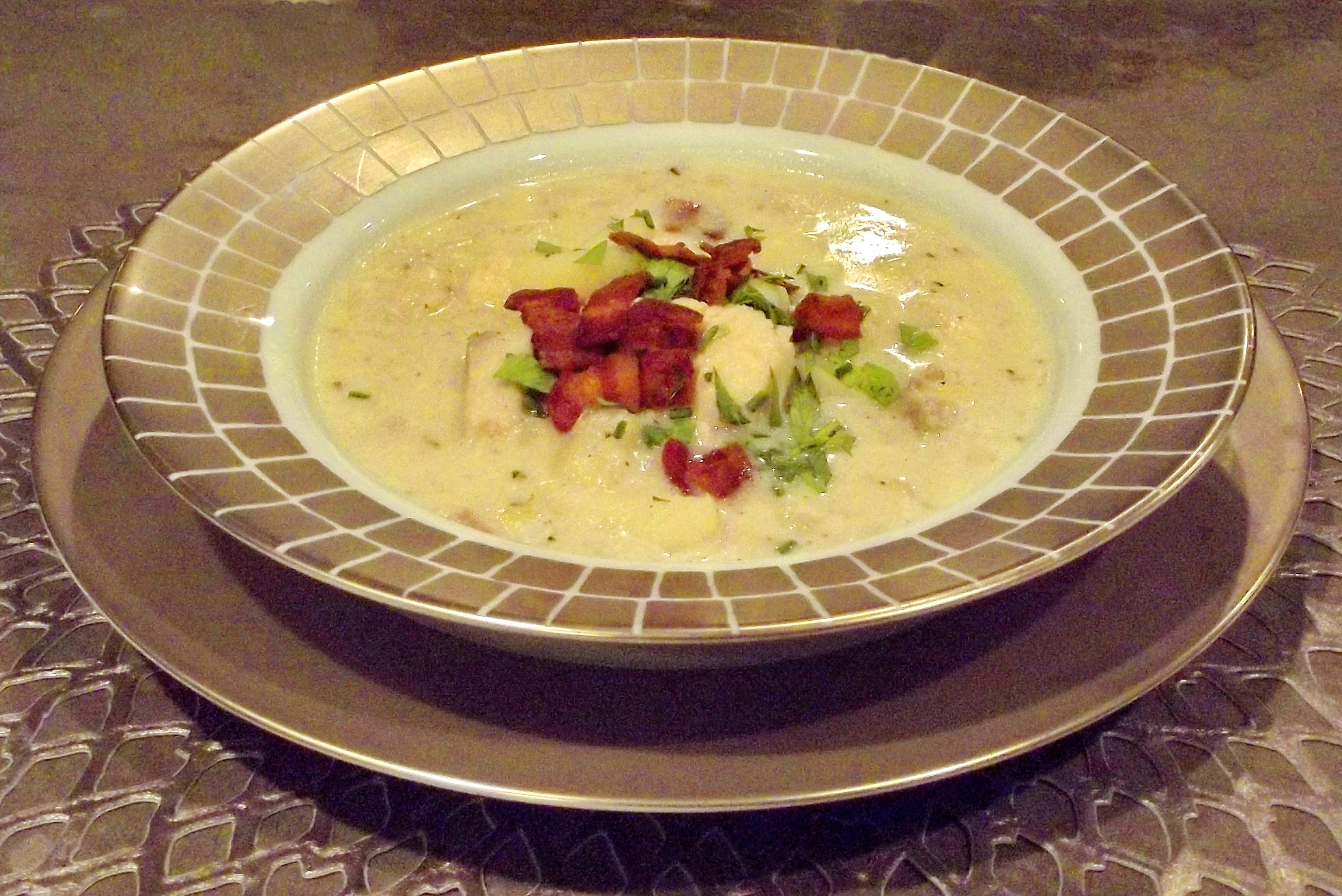
New Jersey Fish Chowder


This is a tiny bit of a cheat, because it starts with bacon fat and uses the bacon to top the soup, but you don’t have to use bacon – more butter or some olive oil will do as a substitute. And while I used flounder to make the soup in the photo, I much prefer a meatier fish like cod.

Chowder is one of those dishes that tastes great the day you make it, and might taste even better the next day. And if you’re in an area of the country where there’s still a bit of cold weather, try this terrific comfort food. Click the link HERE.


Crabby Cakes


Light and crab-filled, these cakes are a snap to make. You can use a ⅓-cup measuring cup as a mold, so you don’t even get your hands yucky – a big plus in the KG’s mind. And this post also includes a wonderful recipe for tartar sauce that you’ll want to use with any number of fish dishes. Click the link HERE.


Sheet Pan Shrimp Scampi


If you are like the Kitchen Goddess, the fact that this recipe was in a post from last November will not mean that you remember it. The KG finds that her short-term memory these days is... well, short. Not gone, mind you, just not the lightning speed it once was. Nevertheless, this is a dish well worth remembering, certainly because it’s yummy, but also because the whole thing happens in a single pan in the oven. Less mess, more fun. You’ll still need a veggie or salad, and I love it with pasta or rice, but even some crusty French bread is great – you’ll just want something to absorb the sauce, so you don’t have to lick the plate. Click the link HERE.

The days are in fact getting longer, so celebrate!

Saturday, February 2, 2019

I’m Rooting for the Blue and Gold Team

 What’s cooking? Sheet-Pan Salmon with Miso and Maple Syrup


When my two sons were living at home, Sunday afternoons were often devoted to watching
football. As a native Texan, I usually rooted for the Cowboys if they were playing – a practice that inevitably was a source of derision from the men in my family, who were all die-hard Steelers fans. If neither of our teams were playing, I almost always favored the team with the better looking uniforms – another reason for hooting from the male gallery.

The fact is that I don’t really like football, which I think I’ve mentioned to you before. That doesn’t stop me from going to the football-watching parties. Especially the Super Bowl parties, to which I invariably take my famous roll-out cookies. I make only stars, and decorate them in the colors of the teams who are playing. I love the challenge: How many different designs can I deliver given only 2-4 colors?

Patriots... again. These were for 2018, against...

But I’m getting a little weary of the Patriots’ success. I’ve iced and sprinkled my way through way too many red/navy/silver color schemes.

... the Eagles.
And before that, against the Falcons in 2017.
While I enjoyed decorating for the Eagles (midnight green/silver/black/charcoal) last year, my favorite year so far was 2014, when the Broncos (navy/orange) played the Seahawks (navy/gray/neon green). I don't have photos of 2014, but those were some fun colors – especially that neon green. And I long for the Dolphins (aqua/blue/orange) or maybe the Jaguars (black/teal/two shades of gold) to show up in the Super Bowl. Gimme some help, fellas!

I like the Broncos' colors. These were from 2016, against...
... the Panthers.

In the meantime, this year, I have to be content with the Rams’ decision to wear bright blue and yellow – a tribute to their win against the Titans in 2000, and a little more fun than their traditional navy, gold and white. And I’ll dream about a day in the far future when we have a Super Bowl whose participants are chosen on the basis of their uniform colors.

* * *

Even though it’s been a while since I’ve written, I haven’t stopped cooking. No sirree. And today I have a real treat for you. I’d call it a sheet pan dinner, but it really needs rice. Because you don’t want to leave any of that unbelievable marinade in the pan – you will want it on the plate and in your mouth. Let me just say that the leftovers engendered a small lunchtime skirmish the next day between me and my prince.

You’ll notice I also didn’t call this Salmon with Asparagus. That’s because it really makes almost no difference whether you use asparagus or green beans (which is what the author of this recipe used in The New York Times) or broccolini or broccoli. The Kitchen Goddess had asparagus, so by god that's what she cooked. The secret to this dish is the miso.

It comes in a big container, but it keeps 1-2 years in the fridge.
 Toss if moss/mold develop.
Kitchen Goddess note: Miso is a paste made mostly from fermenting soybeans. It’s a traditional Japanese seasoning with lots of uses, from sauces to pickling to soup base. High in protein, rich in vitamins and minerals, and gluten-free for those of you who care, miso is a culinary staple in both traditional and modern Japanese cooking, and these days, it’s become a star in the culinary firmament.

The most common flavor categories are white, red, and “mixed,” with the white miso being somewhat mellower or milder in flavor than the red. But all have an amazing impact on a dish, increasing the complexity of the flavors. Through the fermentation process, miso is a chief source of umami, one of the five basic tastes in addition to sweet, salty, bitter, and sour.

Try this: Take a couple of teaspoons of miso paste in a mug, dissolve it into a slurry with a tiny bit of warm water, add a cup of not-quite-boiling water and a nice squeeze of lime, and you have a terrific broth to drink as a pick-me-up between meals or a light addition to your lunch. The taste is mysterious – sweet, salty, nutty, mellow – and all from some fermented soybeans.


Sheet-Pan Salmon with Miso and Maple Syrup

Adapted from Colu Henry in The New York Times.

In the classic coffee-cream-sugar combination, the fat (cream) evens out the bitterness of the coffee and the sweetness of the sugar to produce a flavor combination that’s popular around the world. Similarly, in this recipe, the fattiness of the salmon evens out the flavors between the various components of the marinade: the rice wine vinegar (bitter), the maple syrup (sweet), and the soy sauce (salty). But the kicker is the miso, which adds a big dose of umami.

As I said, you need rice, though I expect egg noodles would also work. Once you start the rice, the rest of the dinner can be ready by the time the rice is done. It’s that fast.

Serves 4.

Ingredients
4  (6-ounce) skin-on salmon fillets, about 1-inch thick
Kosher salt
Freshly ground black pepper
2 tablespoons plus 2 teaspoons maple syrup
2 tablespoons white miso
2 tablespoons rice wine vinegar (a.k.a. rice vinegar)
4 teaspoons soy sauce
2 garlic cloves, finely grated (use a rasp grater)
1½ pounds asparagus (or a pound of green beans), trimmed
4 tablespoons olive oil
½ teaspoon Aleppo pepper (or a pinch of red-pepper flakes)
½ teaspoon toasted sesame oil

Garnish: ¼ cup roughly chopped cilantro, using both leaves and tender stems
4 lime wedges, for serving

Cooked white rice, for serving

Directions
Line one or two sheet pans with baker’s parchment or aluminum foil. Rinse the salmon and pat dry with paper towels. Season well with kosher salt and freshly ground black pepper. Place the fish in a bowl or glass baking dish.

In a small bowl, combine the maple syrup, miso, rice wine vinegar, soy sauce, and garlic. Mix well, and pour over the salmon. With your fingertips, gently massage the marinade all over the fish. Let the fish marinate while the oven comes to temperature.

Preheat your oven to 400º.

In a large bowl, toss the asparagus (or whatever green veggie you chose) with the olive oil, Aleppo pepper, and sesame oil. Season to taste with kosher salt and freshly ground black pepper.

When the oven has reached 400º, lay the salmon fillets skin-side down on the prepared sheet pans and scatter the asparagus (or other veggies) between and around the fillets. Spoon the remaining marinade over the fish.

Baked salmon and asparagus, before the final burst from the broiler. These fillets were 3 ounces each.

Bake the salmon and veggies for 12-15 minutes, depending on the thickness of the fillets. When the salmon is nearly done, raise the oven temperature to broil and leave the pans another 1-2 minutes to lightly caramelize the glaze on the fish.

And after two minutes under the broiler.

Serve with white rice, lime wedges, and a scattering of cilantro.

Thursday, December 22, 2016

Party On! Three Easy and Elegant Hors d’Oeuvres from the Kitchen Goddess
What’s cooking? Spiced Plum Soup, Parmesan Gougères, and Salmon Rillettes


And after the gift buying and the gift wrapping comes the gift exchanging. Which is when someone either comes to your house or you go to theirs. Now I’ll admit that it doesn’t have to go that way – I’ve been known to drop my gifts off on someone’s front porch – but it’s a lot more fun to gather together this time of year, exchange wishes for all good things, and congratulate ourselves on having made it to a new page on the calendar.

This sort of hosting doesn’t necessarily mean giving people a meal, but you want to have something to go with that glass of wine or champagne. Those people shouldn’t be heading back out onto the road without something to muffle the alcohol. So the Kitchen Goddess has three treats you can make – ahead of time! – and have your friends and relatives thinking that you, too, must have Kitchen Royalty in your blood.

Spiced Plum Soup – Note the absence of a temperature descriptor in the name of this item. That’s because you can serve it hot or cold. Either way, it’s elegant and equally delicious. And you can make it days ahead. You only want to give your guests a small serving, as this soup also has alcohol in it. In fact, it starts with a full bottle of red wine, but the alcohol from that cooks away; the smidge of alcohol from the Cointreau (or other orange liqueur) does not. This soup looks and tastes more holiday-spirited than any other item in my repertoire. Sophisticated, simple, and sublime. It’s the little black dress of holiday hors d’oeuvres.

Gougères are traditional cheese puffs, usually made with either Emmenthal, Comté or Gruyère cheese. The great French chef, Daniel Boulud, makes his with Parmiggiano-Reggiano, which I think gives you license to use whichever cheese you prefer. And you there in the back of the room, shaking your head that you’ve never made French pastries and don’t intend to start now? Get a grip – these are easy to do. The Kitchen Goddess would not steer you wrong. You can make these delicacies and freeze them raw or cooked, so you’ll always want some in your freezer. The Kitchen Goddess served them in lieu of rolls at Thanksgiving – so chic. They’re unbelievably light and airy – barely crunchy on the outside, mildly eggy on the inside. Your guests will devour these little luxuries, so have plenty on hand.

✸ Classically speaking, Rillettes is a preparation similar to pâté and originally made from pork confit. Then some genius adapted the process to seafood, and everything about the presentation changed. So why is this luxurious spread called rillettes? I don’t know. Poached salmon puréed with creme fraiche and perked up with some tangy, herby, lemony flavors, it’s divine, and simplicity itself to prepare. Creamy and light, it works equally well on crackers, crostini, or piped into endive leaves.


Kitchen Goddess note: If those ideas don’t float your boat, take a look at a couple of past Kitchen Goddess hits that can be made ahead and are also sure to please.

✸ Those leftover bits of cheese hiding in your deli drawer? Put them to work in a batch of Fromage Fort – an anything-goes cheese spread that just needs about 20 minutes to come to room temperature.


✸ Any kind of pesto is great to have on hand, and they all freeze really well. But for the festive season, the Kitchen Goddess likes Artichoke Pesto, which will also last at least several days in the fridge. Of course, you’ll have to keep yourself from noshing on it, but that’s the risk you take...


Spiced Plum Soup


Adapted from The Silver Palate Basics Cookbook.

Serves 8-10 as a first course; 25-30 as 2-3-ounce “tastes.”

4 16-ounce cans of plums in syrup
1 750-milliliter bottle of Pinot Noir
1 teaspoon cinnamon
½ teaspoon grated nutmeg
½ teaspoon ground cloves
2 tablespoons sugar
¼ cup triple sec (Cointreau or other orange-flavored liqueur)
grated zest of 2 lemons
Garnish: crème fraîche, light sour cream, Greek yogurt, or some combination thereof; mint sprigs

Directions
Drain the plums, reserving the liquid. Use your fingers to remove the pits, then transfer the pitted plums to a medium saucepan and add back the canned syrup.

Stir in the wine, spices, and sugar, and bring the mixture to a boil. Simmer the mixture, uncovered and stirring occasionally, for 30 minutes.

Transfer the soup to a blender and purée 1-2 minutes, until quite smooth. If you worry that any bits of plum remain unblended, strain the mixture through a sieve.

Add the liqueur and lemon zest and stir well. Refrigerate – if serving cold. Serve with a dollop of crème fraîche, light sour cream, Greek yogurt, or some combination thereof, and a sprig of mint (if you have it).

Serving suggestions: To up the elegance factor, the Kitchen Goddess likes to serve this soup as a first course in balloon wine glasses. When it’s an hors d’oeuvre, she passes it in 2-ounce shot glasses on a tray.


Kitchen Goddess note: And now... It’s not hard to make gougères. Maybe you’ll be nervous the first time. The KG was – the first time. The second time? Piece of cake... er, pastry. But it takes the KG a long time to explain because she really wants you to be successful at it. So be patient, read this recipe all the way through, and give it a try.


Parmesan Gougères

Adapted from Daniel Boulud’s Cooking in New York City.

Makes 6-7 dozen.

1 stick (8 tablespoons) unsalted butter, cut into eighths, then each of those into quarters
1 cup cold water
½ teaspoon kosher salt
¼ teaspoon sugar
1½ cups (195 grams) all-purpose flour, sifted
6 large eggs
1 cup freshly grated Parmegiano-Reggiano
⅛ teaspoon grated nutmeg
⅛ teaspoon paprika
dash of kosher salt and freshly ground pepper
2-3 tablespoons milk

special equipment: wooden spoon, pastry brush, baker’s parchment

Directions
Preheat the oven to 400º. Move a rack to the center of the oven. Cut parchment paper to fit two half-sheet rimmed baking pans.

In a medium saucepan, melt the butter and stir in the water, salt, and sugar. Bring the mixture to a boil. Once it boils, immediately remove the mixture from the heat and add the flour all at once, beating vigorously with a wooden spoon until smooth. Return the pan over high heat and continue stirring vigorously for about 2 minutes as the dough cooks. (This 2 minutes is the hardest part; try to find someone who will relieve you in the vigorous stirring after one minute.) After 2 minutes, the dough should come together in a smooth mass and the bottom of the pot will be coated with a thin crust.

Transfer the dough to a standing mixer with a paddle attachment. Beat at medium-low speed, adding the eggs one at a time (!), and beating well after each is added. Stir in the grated Parmegiano-Reggiano, nutmeg, and paprika, and add a dash of kosher salt and freshly ground pepper.

Kitchen Goddess note: For any pastry, the most important element is the ratio of flour to moisture. I find that the trickiness factor is almost eliminated if (1) you can find a scale and get the exact amount of flour measured, and (2) use large eggs – not medium, not extra-large. And for this pastry dough, it’s important to be sure that each egg is fully incorporated into the batter before adding the next one. At first, the batter will tend to separate and look curdled as each egg is added. Relax and keep beating – it’ll come back together.

You have three choices for forming the gougères: (1) If you have a pastry bag and are accomplished at using it, pipe the dough into ¾ round mounds, using a ½-inch round tip. (2) If you want to pipe it but don’t have a pastry bag, spoon the dough into a zip-lock baggie with a half-inch corner cut. Or (3), go the Kitchen Goddess way – because piping is not a KG talent – using 2 spoons. Use the first spoon to dig out a blob of dough about the size of a walnut; take the second spoon to roll the blob gently onto the baking sheet (covered with parchment, of course!). In all cases, your aim is to get little ball-shaped mounds about ¾ inch in diameter, set 2 inches apart. Then with wet fingertips, lightly smooth away any points on the tops of the mounds. Before putting the pans in the oven, brush the tops with milk and sprinkle on additional grated cheese.

Bake in the center of the oven at 400º for 15 minutes, then reduce the temperature to 375º and bake another 20 minutes. The little puffs will get over-brown if given the chance, so until you know how your oven performs, keep an eye out for the last 5 minutes. The gougères are done when they are puffed and golden brown. Transfer the finished puffs to a rack to cool slightly. Serve warm.

Yes, these are small sheet pans. The KG uses them because they allow her to bake her gougères a dozen at a time and thereby keep a constant supply of warm puffs emerging from the kitchen.

Storing Gougères

The best way to store gougères is to form the raw mounds on a baking sheet and stick the sheet into the freezer. Once the dough is frozen solid, lift the mounds off the sheet and pack them airtight in plastic bags. And there’s no need to thaw them before baking; just add an extra couple of minutes in the oven.

If you have leftovers, lay them out on a baking sheet; cover the sheet with plastic wrap and freeze until the gougères are firm. Store the frozen gougères in sturdy plastic bags, where they’ll keep  for several months. Reheat them at 350º on a parchment-lined baking sheet for 6-8 minutes.


Salmon Rillettes


Adapted from Gourmet magazine, December 2004.

Makes about 1½ cups.

1 cup dry white wine
2 cups water
1 celery stalk, thinly sliced
1 small onion, thinly sliced
1 leek, rinsed well and thinly sliced
1 teaspoon whole peppercorns
1 bay leaf
1 lemon, sliced
6 ounces king salmon filet
2 ounces crème fraîche (can substitute sour cream, light sour cream, or a crème fraîche/sour cream combo)
2 tablespoons minced fresh chives
3 tablespoons extra virgin olive oil
1 mounded teaspoon capers, drained
1 teaspoon fresh lemon juice
1 teaspoon Dijon mustard
salt and freshly ground pepper

Directions
Combine the wine and water in a deep skillet with a lid. Add the celery, onion, leek, peppercorns, bay leaf, and lemon. Simmer, uncovered, for 25 minutes.


Add the salmon, cover the pot, remove it from the heat and let it stand for 10-15 minutes.


Remove the salmon from the marinade and chill it in the refrigerator. Discard the marinade.

Transfer the salmon and remaining ingredients to the bowl of a food processor and process until smooth. Chill for at least 30 minutes before serving. Serve with a basket of crostini or crackers, or pipe into trimmed endive leaves with a garnish of dill sprig.


Crostini

And in case you are curious as to how the KG makes her crostini, here you go:

Slice a baguette of French bread in pieces about ⅜ inch wide. (The Kitchen Goddess likes to slice hers at an angle to the loaf, but that’s just for show. No one – least of all her husband, who is frequently tasked with the slicing – knows why.) Place them on a large, rimmed sheet pan, and run them under the broiler for about 1 minute. Turn them over and run them under the broiler for about 30 seconds. Take a large clove of raw garlic and rub it lightly across the surface of the half-cooked side, then lightly brush olive oil across that side as well. Return the crostini to the broiler for 25-30 seconds, depending on how dark you like them to be. Let them cool, then store in large zip-lock plastic bags. They should keep for at least a week.

Happy holidays, everyone!


Saturday, September 6, 2014

Midnight Madness
What’s cooking? Roasted Salmon with Tangy Blueberry Sauce


Greetings from Nantucket! Yes, the Kitchen Goddess has flown the coop for a few days, but not before staying up most of the night managing what looked like (as the hours wore on) a really overwhelming collection of peaches and tomatoes from the farmers’ market. And then, of course, there were the sheets to iron.

Yes, I freely admit to this one obsession: I love sleeping on ironed sheets. (It’s not my only obsession, just one of the few I admit to.) I believe it is not in the style manual for Kitchen Goddesses to change sheets, so this particular need – for ironing the sheets – gives rise to any number of late-night encounters with the ironing board so that the sheets will be ready for the cleaning crew, who do change them. Which is why I was ironing at 4 a.m. instead of heading for bed.

In the meantime, I came up with what I hope is a clever solution for enjoying my mountain of luscious New Jersey peaches even after the season has passed. Because when you are dealing with NINE (yes, 9) pounds of peaches and insufficient time or sugar to make ice cream or some preserved condiment, it’s important to have a plan.

First, I made one more batch of yummy Roasted Tomato-Peach Spread, because I was also dealing with 4 pounds of tomatoes. While that was in the oven, I peeled and cut up 4 pounds of peaches and freezer-bagged them – without sugar, in two 2-pound batches – to make jam or chutney at some later date. I cooked two more batches, weighing 1½ pounds each, with ½ cup of water per batch, for 10 minutes, then stirred ¾ cup of sugar into each and freezer-bagged them as well. Those two bags will do for ice cream. Then all four bags went into the freezer, where they take up much less space than on my counter. Now, when I’m in this kitchen at Christmastime, I hope I’ll be able to serve peach ice cream to my family.

Why start these activities at 10 p.m., you ask? Why not earlier in the day? I get your point. But earlier in the day, I was packing and working on what to do with the salmon I had planned for dinner.

I’ve been staring at the two bottles of blueberry syrup in my fridge for soooo long. It was actually part of a batch I made late last summer, but still tastes great, so – good news! – the time frame for storage can now be extended to a year. It occurred to me that fruit goes with salmon, so maybe I could make a sort of glaze with that syrup.

You will be pleased to know that the Kitchen Goddess was successful. I added balsamic vinegar for tartness, salt to temper the sweetness, and some Asian sesame oil for that nice toasted flavor and a little bit of heat. What emerged was a sweet-tart, almost plummy flavor with a jammy texture that played off the strong flavor of the fish very well. I had to stop myself from licking the plate. My darling husband even asked for more. And now it’s yours to make as well.

I’ve started by reproducing the recipe for the Blueberry Syrup – from my July 5, 2011 post – so that you don’t have to go searching for it, and because it’s fast and easy to make. What I like most about it – aside from the truly pure blueberry flavor – is that it’s not as sweet as most syrups. It’s great on pancakes or a morning waffle, over ice cream, mixed with yogurt, or even as a glaze over roast chicken. Here is some drizzled over frozen peach yogurt.


If you’re not inclined to make your own blueberry syrup, you might still try the Tangy Blueberry Sauce recipe – which comes after the syrup recipe – with a store-bought version of blueberry syrup. In a quick internet hunt, I found several, including Smuckers, Maple Grove Farms, Dickinson’s, and Stonewall Kitchen. Just a warning: The commercial versions may be slightly sweeter than the recipe below.

Blueberry Syrup

Adapted from Food & Wine magazine

Makes about 6 cups.

1½ pounds blueberries (5 cups)
4 cups water
2 cups sugar
6 strips of lemon zest (use a vegetable peeler to get strips about ½ inch wide and 1-2 inches long)
3 tablespoons fresh lemon juice (about 1½ lemons)

In a large saucepan, combine the blueberries with 1 cup of the water over medium heat. With a potato masher or a large fork, crush the berries to release the juices, and bring to a simmer. Reduce the heat to low and simmer 15 minutes. Using a fine-mesh strainer or a food mill, strain the juice, pressing hard on the solids. Discard the solids and set aside the juice.

Rinse the saucepan, and combine the sugar, lemon zest, and the remaining 3 cups of water. Bring to a boil, stirring only until the sugar is dissolved. Boil this simple syrup over moderate heat until it registers 225° on a candy thermometer (about 20 minutes). Add the blueberry juice and lemon juice and raise the heat to high, allowing the mixture to boil at high heat for 1 minute. Let the syrup cool, then discard the lemon zest. (Or let it dry and snack on it – delicious!) Pour the syrup into clean bottles. Seal and refrigerate for up to a year (!), or process as for preserves.

Once you have a supply of blueberry syrup, you’re ready to take it to the next level.


Roasted Salmon with Tangy Blueberry Sauce


Serves 4-5.

For the sauce:
1 cup Blueberry Syrup
1 teaspoon salt
1½ teaspoons balsamic vinegar
2 teaspoons toasted sesame oil
10-12 grinds of black pepper, or to taste

For the salmon:
4 tablespoons unsalted butter
2-pound salmon fillet, preferably with skin on
salt/pepper
Garnish: chopped Italian parsley

All that was left after dinner. But note the consistency.
Make the sauce: In a small saucepan, heat the Blueberry Syrup with the salt and balsamic vinegar over medium-low heat. Bring to a low boil and allow to cook down until it gets to a thick, syrupy consistency, about 5-10 minutes. [Kitchen Goddess notes: 1. Now you are saying to yourself, “But we already started with syrup – isn’t that thick enough?” No. It’s not. Blueberry Syrup isn’t actually very thick at all, as you can see from the photo below. So we need to reduce it to a sauce. 2. Sesame oil will turn bitter if it gets too hot, which is why we add it at the end and only warm it.]

Blueberry Syrup on the left; Tangy Blueberry Sauce on the right.

When the sauce has reached a consistency you like, turn the heat to low and add the sesame oil and black pepper. Stir to combine well and cook 1 minute. Turn off the heat and cover the saucepan until you are ready to serve.

Prepare the salmon: Preheat the oven to 475º. Add the butter to a rimmed baking pan or roasting pan, and put the pan in the oven for 4-5 minutes, until the butter foam subsides.

In the meantime, salt and pepper the fish. When the butter no longer foams, lay the fish – skin side up – in the pan. Put the pan into the oven and roast 5 minutes. Remove the pan and flip the fish over. Spoon some of the butter on top of the salmon. Turn the oven to broil and put the fish back into the oven (4-5 inches from the heat). Broil the fish another 5-6 minutes, or until it tests done. (To check for doneness, use a thin-bladed knife to peek into the flesh along one of the seams.)


To serve: Spoon the sauce over the salmon and sprinkle chopped parsley on top. Serve extra sauce in a small pitcher.


Monday, March 29, 2010

Assigned Reading
What’s cooking? Roasted Salmon with Shallot-Grapefruit Sauce


I’m cleaning out my office, in hopes of finding all the information I need to get my taxes done. Fortunately, I have a helper. His name is Max. And while he’s fairly critical of the process, we must press onward. I hate missing a potential deduction, so I do what I can for that errant nickel or dime. On the other hand, it hasn’t been a fruitless activity. I unearthed a couple of bills I needed to pay, some articles I felt sure would jump-start me on an essay or two, a fabulous recipe for salmon, and a handful of newspaper and magazine pieces I’ve saved. Many of these articles are what my husband describes as “assigned reading.”  That means that I read them and thought they were something that would be valuable – or at least interesting – to either him or one of my sons. These are almost always received with audible sighs and some eye-rolling, but I’m sure they’ll thank me one day.

I come by this habit honestly. Or maybe genetically. From the day I left home for college, and until they breathed their last breaths, my mother and father and grandmother would regularly send me articles from the local papers in San Antonio, where I grew up. They felt sure I’d want to know about various goings-on in my home town – weddings, parties, births, deaths, the whole cycle of life. And the occasional editorial or photograph. I miss that mail. Of course, back then, I was raising young children and didn’t have much time for reading what was going on in my own town, much less in San Antonio, but I did appreciate that warm feeling that comes from just knowing someone was thinking about me.

And now to that salmon recipe I found. It’s beautiful on the plate with some green veggie, like broccolini, and amazingly easy, once you get past the part about sectioning the grapefruit. (But even that’s not hard – keep reading.) It’s also delicious – the citrus is a really fresh taste, and I find that salmon’s strong flavor works really well with a slightly sweet sauce. The original recipe said it served four, but I made it for the two of us (my husband and me), and could barely keep myself from licking the pan. So I’d double it for four.

Kitchen Goddess Tip #1: I once did a side-by-side taste test with wild and farmed salmon, and the difference is stark.  So while I’ve made this recipe with both types, I heartily recommend you buy wild salmon if you can stomach the price difference, which is also stark.

Kitchen Goddess Tip #2: To section the grapefruit, slice about 1/4 inch off either end so that you have a flat base for slicing off the peel. Then with a sharp paring knife, carve down the sides of the grapefruit so that none of the bitter white pith remains. Holding the peeled grapefruit in one hand, slice into one section right next to that thin “skin” that separates them, and by turning your wrist with the knife, you can push the segment out. There’s a good video (less than 4 mins) here. I’m told that submerging the grapefruit in boiling water for 5 mins makes peeling it much easier; but, frankly, I could be done with the whole process before the 5 mins is up. It’s just not that hard. Go for it.

Kitchen Goddess Tip #3: For the honey, I prefer acacia honey, which has a much milder flavor than your basic wildflower honey.