Showing posts with label flounder. Show all posts

Thursday, March 2, 2023

As the Days Get Longer...

What’s cooking? Five Great Meatless Dishes


It’s Lent. Again. And I’m not any better at denying myself than I was during previous Lenten seasons.

One of the good things about the COVID shutdown – and there were precious few of those – was that I had fewer opportunities to indulge. At least in the beginning, grocery runs were limited to what I could get brought to my car, and while I didn’t stop lusting after the occasional Baby Ruth or Snickers, I couldn’t really bring myself to stick them on the grocery list of what was surely supposed to be basic requirements. In the end, I lost 30 pounds over that 2-year span. And while I’ve since recovered a few of them, it was that early period of curbside pickup – when no candy bars, donuts, Starbucks’ marshmallow crisps, or those wonderful chewy ginger cookies that my grocery store sells individually – that kept me on the road to success.

So on the subject of fasting, I’ve done a little research, and apparently, many of the feast and fast days of Christianity actually predate the religion. Lenten fasting didn't evolved as a Christian practice until about 300 AD. And the word “Lent” comes from the Old English word læncte, meaning “lengthening (of daylight hours).” In other words, Lent was more than a period of self-denial – it was a recognition of the longer days and the coming of spring.

Easter itself is a moveable feast tied to the start of springtime, taking place on the Sunday after the first full moon that occurs on or after the vernal equinox. And if you can wrap your brain around that calculation, I congratulate you.

In any case, the most popular way Christians recognize the Lenten season is to abstain from eating meat, if not for the whole 40 days, then at least on Fridays. And in my book, the best way to counter that bit of self-denial is with a few really good fish recipes.

Ta-da! Kitchen Goddess to the rescue. Here are five of my best fish/seafood dishes, in no particular order. I did try to make them for a range of types of fish – regardless of how much you might like a particular fish, no one really wants to eat the same one week after week. As in life, the joy is in variety. I do hope you’ll try at least one, even if you’re not Christian or even religious in any way. We can all celebrate the coming of spring!


Whitefish al Cartoccio (or en Papillote)


One of my prince’s favorite ways to have fish is al cartoccio – the Italian term for baking food in a foil or parchment packet. The French call it en papillote, but it’s exactly the same thing. my hubby and I use the Italian name in deference to the tiny Italian restaurant in Manhattan where we were introduced to the concept.

You’ll be amazed at how easy it is. The fish bakes in tightly closed individual envelopes, with herb butter, lemon slices, and spring veggies, ensuring that all the flavors swirl together. The parchment or foil holds enough of the heat that the dish is still warm when you open it, so the rising steam presents your nose with a treat of its own. I usually make this dish with flounder or sole, although that little Italian restaurant served it with red snapper. Click the link HERE.


Salmon with Miso and Maple Syrup


The Kitchen Goddess has a couple of friends who serve this dish as part of their regular rotation. It’s that good and easy.

If you don’t know miso, you must give it a try. It’s a traditional Japanese seasoning: a paste made from fermenting soy beans. But don’t let that turn you away – it’s a great source of umami flavor, combining sweet, salty, nutty, and it’s the secret to this dish. The fact that the veggies cook in the same pan alongside the salmon... well, that’s just a bonus.

Don’t leave any of the marinade in the pan – you will want it on the plate and in your mouth. Let me just say that the leftovers engendered a small lunchtime skirmish between me and my prince. Click the link HERE.


New Jersey Fish Chowder
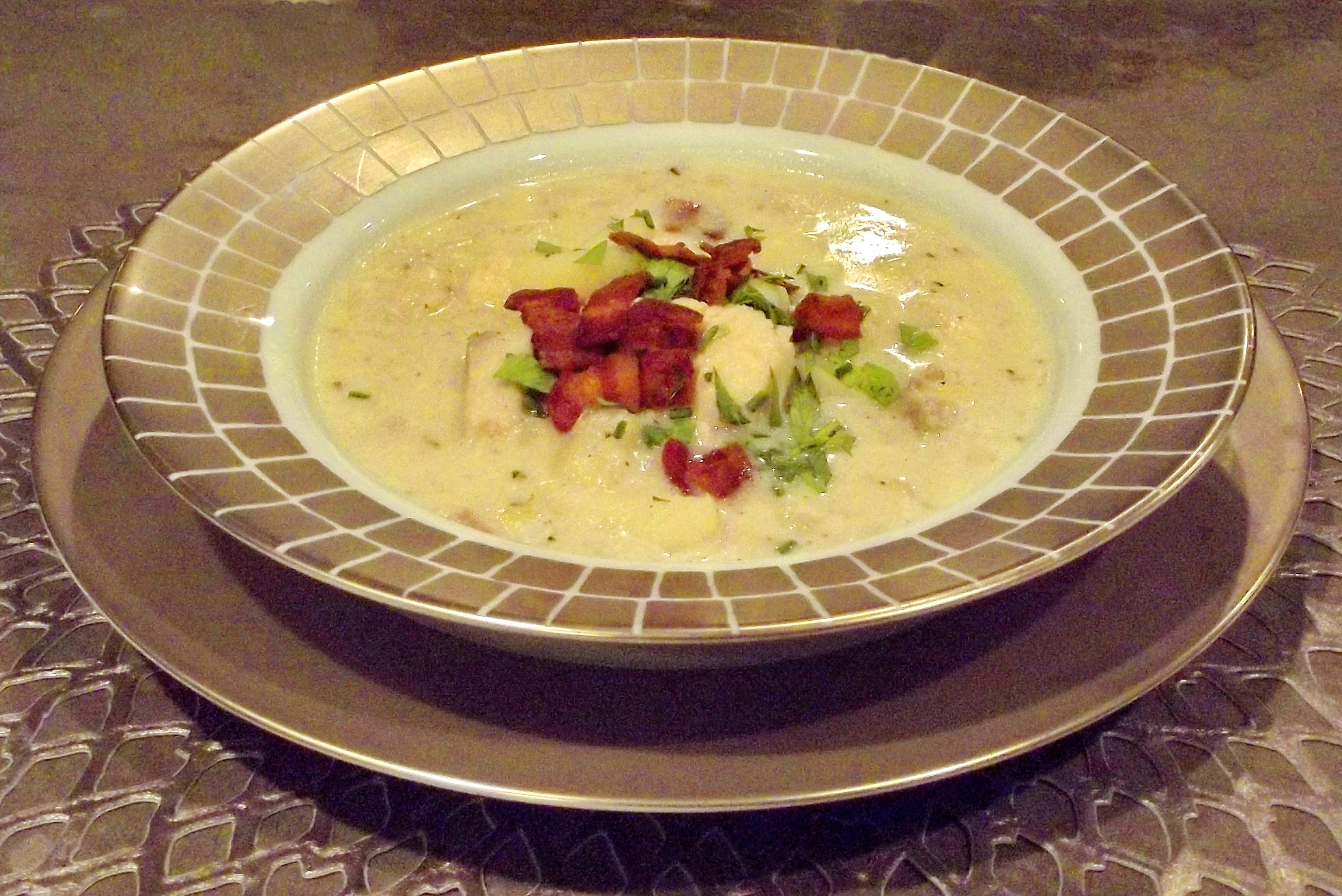


This is a tiny bit of a cheat, because it starts with bacon fat and uses the bacon to top the soup, but you don’t have to use bacon – more butter or some olive oil will do as a substitute. And while I used flounder to make the soup in the photo, I much prefer a meatier fish like cod.

Chowder is one of those dishes that tastes great the day you make it, and might taste even better the next day. And if you’re in an area of the country where there’s still a bit of cold weather, try this terrific comfort food. Click the link HERE.


Crabby Cakes


Light and crab-filled, these cakes are a snap to make. You can use a ⅓-cup measuring cup as a mold, so you don’t even get your hands yucky – a big plus in the KG’s mind. And this post also includes a wonderful recipe for tartar sauce that you’ll want to use with any number of fish dishes. Click the link HERE.


Sheet Pan Shrimp Scampi


If you are like the Kitchen Goddess, the fact that this recipe was in a post from last November will not mean that you remember it. The KG finds that her short-term memory these days is... well, short. Not gone, mind you, just not the lightning speed it once was. Nevertheless, this is a dish well worth remembering, certainly because it’s yummy, but also because the whole thing happens in a single pan in the oven. Less mess, more fun. You’ll still need a veggie or salad, and I love it with pasta or rice, but even some crusty French bread is great – you’ll just want something to absorb the sauce, so you don’t have to lick the plate. Click the link HERE.

The days are in fact getting longer, so celebrate!

Friday, June 1, 2018

A Spring Celebration, Still Good in Summer

What’s cooking? Whitefish en Papillote with Tomatoes, Snap Peas, and Herb Butter


In the runup to my husband’s birthday, I often focus on the foods he likes. We’ve been married just long enough that we’ve given each other just about every variation on a present – from wildly extravagant, like the year I took him to Pebble Beach to play golf, to the thoughtful-but-truly-unexciting, like a new book by one of his favorite authors.

And he’s not nearly as thrilled as I am to look for a hot new restaurant for the celebration, so that part often comes down to something from the Kitchen Goddess.

Back in our just-married days, when we lived in Manhattan, there was a darling little Italian restaurant in our neighborhood. (Frankly, there’s a darling little Italian restaurant in almost every neighborhood of NYC. It’s a New York thing.) We went there often, which is what you can do when you have two salaries and no kids, and his favorite dish was Striped Bass al Cartoccio.

These days, when he thinks about that dish, he always pronounces it “al car-TOE-chee-o” using his best Italian accent and arms open wide in his best Italian opera singer imitation. But for some reason, I’ve never tried to duplicate the preparation.

Then not long ago, among the daily onslaught of food-related emails I get – remember when it was actually fun and exciting to get email? – I came across one for “fish packets.” Ah, said the Kitchen Goddess, this will be just the thing. And so it was.

The concept is amazingly simple: fish baked in a tightly closed envelope of parchment (or sometimes foil), often with herbs, lemon slices, or other seasonings. The package holds in the moisture, to steam the fish. The envelope is generally opened at the table, so guests can smell the aroma when it opens. It’s called en papillote in French, al cartoccio in Italian – but whatever you call it, it’s a technique well worth learning.

This particular preparation fairly sings “spring,” with the light flavors of herbs and tomatoes and sugar snap peas. The fish stays moist and light because it cooks quickly, so the veggies stay a tiny bit crisp; the smear of butter on top and underneath the fish makes sure those flavors go all the way through it. The parchment holds enough of the heat in that the dish is actually warm when you open it on your plate. Just the smells that come out of that little package will have you swooning.

Another amazon find
This is a dish that looks fancy, but is in fact incredibly easy. You can make the herb butter the day before, but if you do, be sure to let it sit out at room temperature for at least 30 minutes, so that it will spread easily.

A little kitchen wisdom: butter is fine at room temperature (covered) for at least a couple of days, unless your kitchen is really warm. The KG often leaves hers out overnight in a dish like the one at the right, for easier spreading on toast in the morning.


Kitchen Goddess note about parchment paper: The hardest part about parchment paper is that it generally comes in a roll, and getting those sheets to flatten out is a challenge. But the KG has a solution or two for that little wrinkle: (1) crumple the sheets, then smooth them out (This is an amazingly effective method, as long as you’re not put off by serving slightly wrinkled packets); (2) follow the Kitchen Goddess’s example and buy pre-cut sheets that come already flat. KG buys hers at amazon.com, but your local baking supply shop may carry them.


Whitefish en Papillote with Tomatoes, Snap Peas, and Herb Butter

Adapted from Katherine Sacks on Epicurious (September 2017)

For the herbs, the Kitchen Goddess used thyme and dill and parsley, because that’s what was in the garden; cilantro and chives would also be good candidates.

To serve 4.

Ingredients
For the herb butter:
½ cup (1 stick) unsalted butter at room temperature (Let it sit out while you get your mise-en-place.)
2-3 tablespoons finely chopped tender herbs
1½  teaspoons kosher salt, divided
½ teaspoon freshly ground black pepper, plus more for seasoning the fish

For the fish:
1 pound sugar snap peas, trimmed and thinly sliced lengthwise
1 pint cherry tomatoes (about 2½ cups), quartered
2 large garlic cloves, thinly sliced
four ½-inch thick skinless fillets of white fish, like flounder or tilapia (about 6 ounces each)
Paprika (smoked or sweet)
¼ cup shredded fresh basil leaves (See my post on 50 Ways to Love Your Basil for step-by-step on chiffonade technique)

Special Equipment: four sheets of parchment paper (about 12 inches by 16 inches each)

Directions
Preheat your oven to 400°F.

For the herb butter:
In a small bowl, combine the butter, herbs, 1 teaspoon of the salt, and ½ teaspoon pepper. Let it sit out while you prepare the veggies.


Assembling the packets:
Lay a parchment sheet flat on a work surface. Smear 1 tablespoon of the herb butter in the center of the sheet, in a streak about the length of the fish and an inch or so wide. Arrange one-quarter of the snap peas, tomatoes, and garlic evenly over the butter.


Place a fish fillet on top of the vegetables, then smear another tablespoon of the herb butter on top of the fish. Season the fish with ⅛ teaspoon of salt, a pinch of pepper, and a sprinkling of paprika.

The KG couldn't get 6-ounce fillets -- only very thin 2-ounce fillets -- so she used 3 in each packet. You have to be flexible.

Fold the long sides of the parchment together over the fish (like you would with a sandwich that you’re wrapping for a picnic lunch). Gather the ends of the paper, then fold and tuck them under the fish to form a packet. [KG Note: There are lots of ways – most of them more complicated – to fold parchment around the fish, but as long as the ends of the parchment are well tucked under the fish, the butter and moisture won’t escape and you’ll be fine.]


Carefully move the packet to a baking sheet, and repeat the assembly process for each of the other fillets.

Depending on the size of the fish, you may be able to fit all four on a single, large, rimmed baking sheet. If not, use a second baking sheet. Just make sure all four packets are resting solidly on the sheet in a single layer.

Bake at 400º until just cooked through, about 12-13 minutes. If you want to test, insert a skewer through the parchment and into the fish. If it slides through the fillet easily, your fish is done. Carefully unfold the packets (steam will escape), and sprinkle the tops of the fish with ribboned basil.

A final note: You can make the butter 2-3 days ahead, and refrigerate it; just be sure to let it come to room temperature before you try working with it. Fish packets can be assembled up to 4 hours ahead and chilled. Let them sit at room temperature for 15 minutes before cooking.


Friday, April 18, 2014

One Fish, Two Fish, Old Dish, New Dish...and Dessert
What’s cooking? Fennel Flounder, Spicy Crab Linguine, and a Dessert Bonus


The Wall Street Journal this week reported that seafood consumption in the U.S. has been in a steady decline since 2004, from 16.6 pounds per average consumer to a low of 14.4 pounds in 2012, the last year for which they have figures. That’s compared to 46 pounds of pork, 57 pounds of chicken, and a whopping 82 pounds of beef. I’d say “holy cow,” but it would just sound like a bad joke.

The Kitchen Goddess, for one, has been doing her part to lift seafood consumption. At least for the Lenten season. From Salmon Cakes and my best Broiled Fish, to Tuna Spinach Souffle – I’ve done what I could to give you a nice range of techniques and types of fish for your Friday Lenten dinners. And today, I have not one, but two more options for cooking and eating seafood. See what a good friend I am?

Let’s just start by reviewing the facts.

1. Most fish and other seafood have at least some omega-3 (unsaturated) fatty acids.

2. Omega-3 fatty acids are proven aids in reducing inflammation in the body, which helps prevent both heart disease and Type 2 diabetes.

3. One study of 20,000 men found that eating fish once a week slashes the risk of sudden cardiac death in half. And fish lovers have much lower rates of Type 2 diabetes. The American Heart Association recommends two servings of fish or other seafood each week.

4. All kinds of seafood are also great sources of protein.

5. Seafood is delicious.

So, ladies and gentlemen, let's eat some fish!

The first preparation today is one that I’ve posted about before, but never with a photo. Yes, sometimes, the Kitchen Goddess will actually cook something and forget to get the camera out. Mostly, that happens when she is either really really hungry or her husband is really really hungry and threatening who-knows-what. But this week, I made that dish and remembered just in time to take a photo or two.

There’s a lot of chopping with this dish, but it’s very easy and takes little time to assemble. The fennel sweetens as it cooks, and that sweetness presents a great counterpoint to the acidity of the tomatoes and just perks the fish right up. In this photo version, I used overlarge tomatoes, with the result that the dish was soupier than ever before, but just as tasty. (I ended up serving it in bowls.)


Fennel Flounder

Serves 4.

For the mirepoix:
2 tablespoons olive oil
1 tablespoon butter
2 large carrots, diced
1 medium onion, diced
2 stalks celery, diced

1½ pounds flounder filet (or other relatively flat fish)
1 large fennel bulb, trimmed and thinly sliced
tomatoes – about 2 cups diced (fresh tomatoes – not canned)

Heat oil/butter in a skillet over medium heat and add mirepoix, stirring frequently for 7-8 minutes. Spread the cooked vegetables on the bottom of a medium-sized (approx. 2-quart) casserole dish. Arrange half the fish in one layer, and sprinkle with half the fennel. Arrange the rest of the fish in the next layer and top with remaining fennel. Scatter tomatoes evenly on top. Season with garlic salt and lemon pepper. Bake, covered, at 400º for 30-35 minutes, then remove cover and broil until the tomatoes get slightly toasted (about 2 minutes).


Kitchen Goddess note: I have made this recipe using a 4-inch deep casserole dish, and using a low, flat dish. If your casserole dish is low and flat, you may only need one layer of the fish and one layer of fennel. Either way works.


The second dish is from a recipe I spotted in The New York Times this week, and simply couldn’t resist. Now I know you might have seen this recipe and thought about making it. But you don’t know David Tanis (the writer), and he’s being paid to give you these recipes, so how reliable can he be? On the other hand, you know the Kitchen Goddess, and you know she gives you these preparations out of pure love. So you can believe me when I say you should make something. This crab dish is one of those somethings.


It’s a great dish for dinner with roasted asparagus, or as Tanis suggests, on Easter Sunday as a lunch entrée. If you chop up the herbs and other seasonings first, and have them ready in a small bowl, you can put this dish together in almost no time. I took the trouble to find fresh pasta – which cooks faster than dried – at my grocery store, and the entire meal took about 20 minutes to cook. It’s creamy but with a bright green freshness that really livens up your taste buds.

Kitchen Goddess note: Do not ignore the jalapeño pepper. If you are a heat-avoider (which I am), go with the jalapeño and remove the seeds and ribs; for more heat, leave some seeds in or buy a serrano pepper instead. But the jalapeño keeps the dish from being too rich, provides a nice spark, and heightens the taste of the herbs.

Spicy Crab Linguine

Adapted from David Tanis in The New York Times

Serves 4.

The seasoning bundle:
1 medium-sized jalapeño chile (seeds and ribs removed), finely diced
2 tablespoons finely cut chives
5-6 scallions, sliced thinly and on an angle
1 tablespoon fresh tarragon leaves, chopped
1 pound linguine
½ cup low-fat plain Greek yogurt
½ cup crème fraîche
3 tablespoons Dijon mustard
Pinch of cayenne pepper
1 pound cooked crab meat, lump if possible and fresh (not pasteurized) if possible
Salt and freshly ground pepper to taste
Cilantro sprigs, for garnish

Prepare the seasoning bundle, combine and set aside.

Bring a large pot of water to boil with a couple of tablespoons of salt. Add the linguine and cook until al dente.

At the same time that you add the pasta to the water, combine the yogurt and crème fraîche over medium heat in a large, deep skillet. (I used a 3½-quart Le Creuset cast iron braiser to cook and serve the dish.) Whisk in the mustard and cayenne, and season to taste with salt and pepper. You are only trying to get the mixture warm, not boiling, so adjust the heat accordingly.

Fold in the crab meat so as not to break up the lumps, and heat through.

When the pasta has reached the al dente stage, drain it and add it to the skillet mixture. Fold it gently into the sauce, again so as not to break up the crab meat too much. Add the seasoning bundle and stir to distribute evenly.

If you are serving in a separate dish, be sure to heat the dish ahead of time, as the linguine with sauce needs to be served warm. Garnish with cilantro sprigs.


And now, because I am such a generous soul and know how much you like dessert, I have a short, easy idea for dessert – the very same dessert I served with the crab linguine. I knew I had it right when, at the grocery store, the clerk checking out my ingredients for that evening cast her eyes across the collection and said, “Can I come to your house for dinner?”


I love fresh pineapple, and the ones showing up now in my local grocery stores need only a day or two on the kitchen counter to get lusciously ripe. To serve it as dessert, I turned to pineapple’s long-time best friend, the coconut. I found coconut gelato in one store, but if you are not so lucky, I know that many supermarkets now carry at least one brand of coconut-milk-based ice creams (to satisfy lactose-intolerant customers), which are quite good.

I piled diced pineapple on top of the gelato, and spooned some of my ground cherry shazam – that syrupy stuff made from cape gooseberries (also called ground cherries) that I told you about last summer. You did make some, didn’t you? Ground cherries have a faintly pineapple taste, so it worked well with the fresh fruit. If you don’t have any shazam, you could drizzle a bit of honey on top, or dilute your favorite jam – peach jam or orange marmalade would both work. So easy, and so yummy looking!


Tuesday, September 4, 2012

Curse of the Nightowl
What’s cooking? New Jersey Fish Chowder


We spent most of last summer trying to remember on a daily basis to pick up a copy of The New York Times. It had seemed too complicated to try getting one subscription in Texas and another in New Jersey. Besides, the minimart in our NJ building sold papers, so all we had to do was remember.

This summer, remembering how hard that remembering part had been, I bit the bullet and opened a new account in Jersey City, under my husband’s name. Delivery went swimmingly until we popped down to Texas for a week, and when we got back, suddenly we were getting two copies of the paper every day.

Sunday, February 20, 2011

Beep, Beep!
What’s cooking? Fennel Flounder

I’m surrounded by beeps.

My computer beeps at me for the usual variety of reasons – hello or goodbye, mail arriving, browser stops working, a program won’t load – that’s not news to anyone. But our house is only two years old, so most of the appliances operate with some sort of system that I’m sure the manufacturers believe is helpful. Some days, however, I go almost crazy trying to figure out which one of them is calling to me and why.

Consider:

– The washer beeps when the load is out of balance, like if I don’t put enough other stuff in when I wash the bathroom rug.
– Ditto the dryer. And both of them sing a little song when their cycle is over. You can hear it almost anywhere in the house.
– The microwave beeps when it’s done, and again every 10 seconds after that if I haven’t removed whatever I was heating.
– The coffeemaker beeps twice when it has finished brewing, and again 20 minutes later to tell me it’s turning itself off.