Showing posts with label pork tenderloin. Show all posts

Sunday, May 29, 2022

A Culinary Salute to Our Armed Forces

 What’s cooking? Grilled Pork Tenderloin with Orange Marmalade Glaze


A terrible photo of my Dad but I love the determination and excitement in his face.

Memorial Day.

It was always a special day for my dad, who was a pilot in World War II and treasured his memories of the men and women who served with him but never made it home. He was a big crier, so we never really got many stories about his experiences in the service. He’d start a story, then tear up, and never get finished. Start again, tear up again, and ... you get the picture. He spent time in Marrakesh, flying reconnaissance missions, and back in the U.S., he taught Chinese pilots to improve their skills on U.S. aircraft. I have a wonderful letter from one of those pilots, saying how honored he and his fellow pilots were to be taught by my Dad. So I think of Memorial Day as a day to honor him, too.

My father also enjoyed grilling anything, so I think he’d love today’s pork tenderloin recipe I discovered. As in many aspects of his life, Dad lived large, so his enthusiasm for grilling usually produced meat with a bit of char. “A little charcoal is good for you,” he’d always claim. But I don’t recommend that approach with this recipe.


In fact, the best thing you can do with this recipe is to avoid cooking the pork too long. According to the National Pork Board, today’s pigs are bred to be much leaner than in the past, so that medium-rare is now a preferred doneness for tenderloins if you want to maximize juiciness and flavor. Those qualities come at an internal temperature of 145-150º. So you are well advised to use a good meat thermometer.

I found this recipe in a search for something simple to do with the pork tenderloins my prince brought home from Costco one day. As a little unsolicited plug for that store, I will say that their meat and fish tend to be exceptional without regard to the price. That’s because they do such volume that both meat and fish are very fresh. Of course, you have to be willing to buy more than you might otherwise, but it’s worth sticking some of it into the freezer.

So back to the recipe. You will not believe how flavorful is this sweet-salty marriage of marmalade and honey with the soy sauce. Very umami. And I don’t know of an easier sauce to make – no chopping or slicing or grinding, so it’s ready in 10-15 minutes. You likely have the major ingredients already: marmalade, honey, soy sauce. When I make it for my hubby, we practically fight over the leftovers. To be truthful, we don’t actually fight over the leftovers because I put them in a plastic container and don’t remind him about them. But if I told him about them, we’d have to have a serious discussion about sharing.

My friend, Gail, offered to make this pork dish for a ladies’ luncheon that I was hosting... Ok, so she didn’t offer. But when I asked, she was very gracious. (My friends are so kind that when I have what I call “a suggestion,” they just smile and say “fine.”) The instructions on the original recipe included a note to coat the meat with olive oil before grilling, but Gail forgot that part, recalling it in one of those “OMG!” moments only as she and her hubby were already grilling. Her husband suggested she not tell me. And when she mentioned it to another of the women coming to lunch, that woman also said, “Don’t tell Lee.” So, of course, she told me. This is the problem of being friends with the Kitchen Goddess.

But as it happens, the Kitchen Goddess had made this recipe and also forgot to oil the meat before grilling, and she decided it didn’t really matter, unless you’re really into keeping your grill clean. So I’ll leave that part of the instructions in the writing, but you have now been alerted.

Kitchen Goddess note: If you don’t have a grill, this pork can roast in the oven. The author suggests searing it on the stovetop in a frying pan, to develop a nice Maillard crust on all sides, then putting it in the oven for 15-20 minutes at 400º.  Let it rest about 10 minutes before slicing.


Grilled Pork Tenderloin with Orange Marmalade Glaze

Adapted from Elise Bauer at Simply Recipes 


Total time: 90 minutes, including the marinade time, and you can even cut that short.

Serves 2-3. (Who am I kidding? It serves 2, with enough left over for a small lunch.)

Ingredients

⅓ cup soy sauce (use gluten-free soy sauce for gluten-free version)
⅓ cup orange marmalade (or lemon, store-bought or homemade)*
⅓ cup honey
1 tablespoon plus 1 teaspoon rice wine vinegar 
Pinch of crushed red pepper flakes, or Aleppo pepper
1 pound pork tenderloin
2 scallions, thinly sliced (optional)
Olive oil for the grill (and you’ll remember that this is optional)


*Kitchen Goddess note: You know the Kitchen Goddess already had homemade marmalade. Two flavors, in fact. You are welcome to go buy a nice brand, but if you are so inclined, here are links to two of my faves: Triple Citrus Marmalade and Green Tomato & Lemon Marmalade. You don’t even have to go through the canning process unless you want to make a big batch to store. Make it, put it in jars, then refrigerate what you think you’ll use and give the rest to friends. Trust me, they’ll love you for it.


Directions

First, make the marinade. In a small saucepan, stir together the soy sauce, marmalade, honey, rice wine vinegar, and red pepper flakes. Bring the mixture to a simmer over medium heat. Remove the sauce from the heat and let it cool to almost room temperature. If you are in a hurry – which I always am – you can set the pan in an ice bath for a few minutes and stir until the sauce is just warm.

Set aside half of the marinade to use as a sauce with the finished tenderloin.

Use the remaining half of the marinade to marinate the tenderloin for 1 hour. (Comments on the website suggest that you can reduce the time – if you’re in a hurry – to as little as a half hour.)
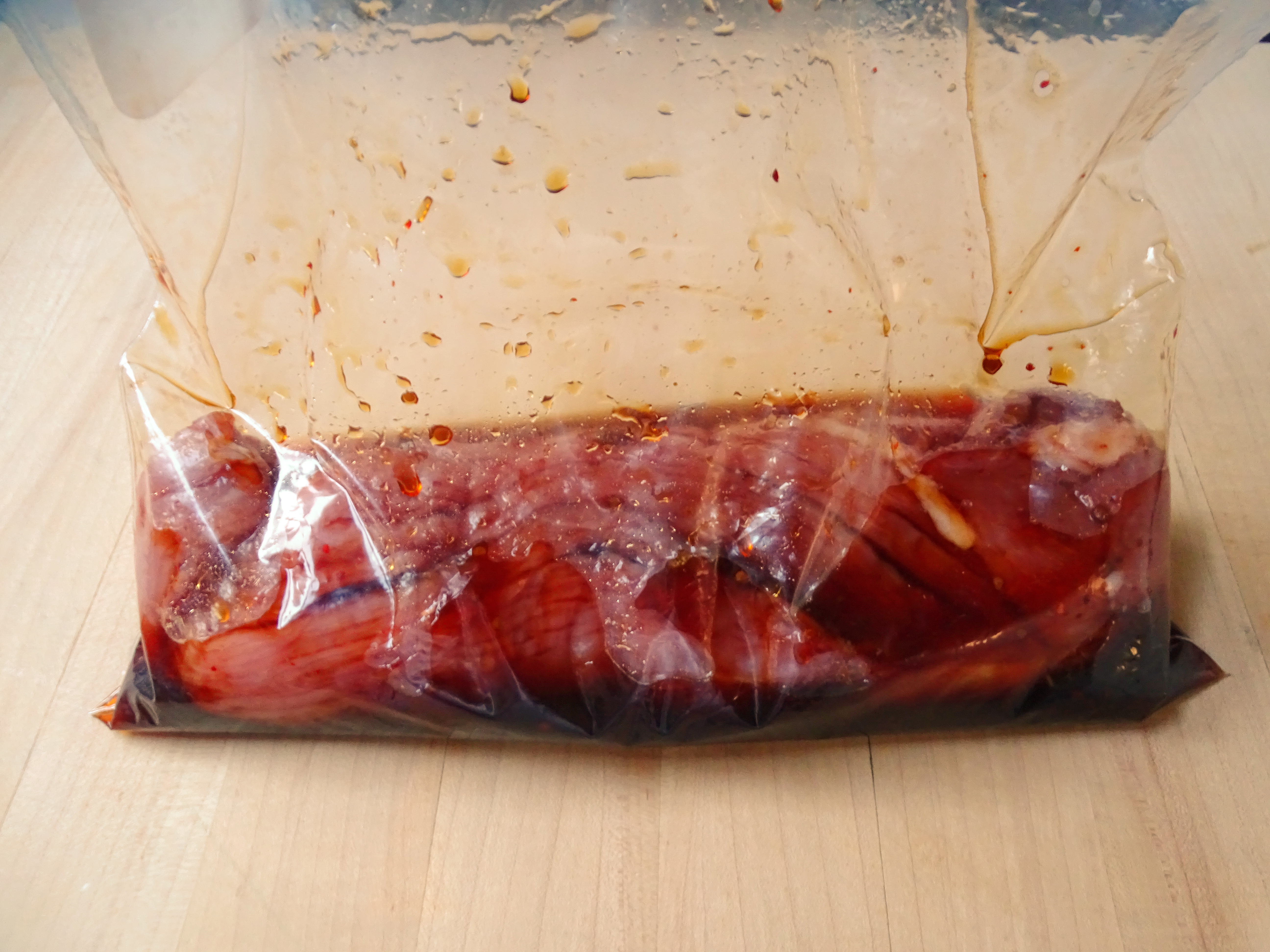

Kitchen Goddess note: The Kitchen Goddess prefers the ziploc bag method of marinating: place the meat inside a large ziploc bag, pour the marinade over it, and close the bag, removing as much air as possible in the process. This methodology practically eliminates the mess factor (no cleanup!), reduces the chance of contamination from bacteria in the area (the bags are nonreactive), and it saves room in the fridge.

While the meat marinates, prepare your grill for high direct heat on one side, and low heat on the other.

Remove the tenderloin from the marinade and toss the used marinade. Coat the meat lightly with olive oil. (Or not, remember?) To sear the meat, lay it across the grill, with the larger end of the tenderloin on the hot side of the grill, and the narrower end toward the cool side. After 1-2 minutes, when the grill marks are good on the first side, then roll the meat to another side for another 1-2 minutes. Keep rolling the meat until all sides have been lightly seared.

Once the meat is fully seared, move the entire piece to the low heat side of the grill. Cover and cook a few minutes more, until the internal temperature of the tenderloin reaches 140-145º F (using 145º if you like your meat more well done). I would give you a time frame for this part, but much depends on the heat of your grill, the thickness of your meat, and the skill of your grillmeister.

When the meat has reached the proper temperature, transfer it to a platter or cutting board. Tent the meat with foil and let it rest 5-10 minutes. The meat continues to cook under its little foil tent, so if you’ve gotten the temperature above 140º, go for less resting time.

Slice the meat in ½-inch slices, drizzle on some of the remaining glaze, and sprinkle with the scallions, if you are using them. Serve with rice and a pitcher of the glaze on the side.

And have a happy Memorial Day weekend!


Monday, March 12, 2018

Springing Forward

What’s cooking? Pork Medallions with Fennel-White Wine Sauce


Well, it’s almost spring. Just not yet, even though here in Texas, we’ve got blooms aplenty on the flowering trees, and my pansies are exploding with happiness at having survived the winter. But I’m getting really tired of the hearty soups and roast chicken dinners. And the asparagus isn’t quite “local” yet, if you know what I mean.


So I was delightfully surprised to find a recipe for pork tenderloin that didn’t require roasting or bundling my prince up so that he could grill it in the cold.

I don’t remember ever having pork tenderloin from my mother’s kitchen. We often had pork chops, and occasionally pork roast, so maybe this is one of those cuts – like a tri-tip roast – that wasn’t really popular or well known back then. In any case, as a grown-up, I’ve become a big fan. It’s as tender as a beef filet but much less expensive; it’s also juicy, flavorful, and very lean. Would you like to know why it’s so tender? I thought so. The cut comes from an area along the spine, so it’s a muscle that’s used for posture instead of movement.

Even better, this particular treatment is so fast and easy, it blew me away. The cooking part of the recipe takes... drum roll, please... less than 10 minutes. Can you believe it? The Kitchen Goddess was more than a little skeptical until she made it herself.

If you’re not familiar with fennel, you may be tempted to try this recipe with celery or onion. Don’t do it. Just allow me a short digression on the vegetable, then go out and introduce yourself to it.

According to wikipedia, fennel is a highly aromatic member of the carrot family. (News to me.) It’s also a rich source of protein, dietary fiber, B vitamins and several dietary minerals. The plant came originally from the Mediterranean coast, which is why you’ll find fennel popping up in Italian cuisine. The tall, feathery fronds are often in salads or omelettes; the seeds look and taste a lot like anise; and the flowers produce a potently flavorful pollen that the Kitchen Goddess has raved about more than once. Fennel bulbs – which look like a marriage between a head of celery and a spring onion –  have a faint licorice-like taste when raw; cooked, they’re completely different. Aside from their use raw in salads, fennel bulbs make a wonderful addition to soups and risottos, and they’re terrific grilled or braised on their own. Here, the bulb adds a light, spring-like flavor to the sauce.

So now that you’re ready for the magic to happen, the most important part of the process is our old friend, mise en place. Remember: less than 10 minutes to cook? So there’s not a spare instant to pour the wine, measure the broth, or chop the herbs. Get it all ready before you turn on the stove; otherwise, you will find yourself deep in the weeds, as they say in the restaurant industry.


The recipe here is written for a one-pound piece of meat, which in my experience is about average for pork tenderloin. So it feeds two people, with some left over for a lucky soul the next day. At most, it’ll work fine for three. If I were cooking for four, I’d double the meat and use a whole fennel bulb that’s more of a medium size than large. The use of the herbs in the preparation is so fabulous, I’d at least double it if you’re cooking for four. You’ll also have to cook the meat in two shifts.

This recipe comes from A Good Food Day, by Marco Canora, chef-owner of Hearth, in New York City. In spite of (or perhaps because of) his success as a chef, Canora discovered, at age 40, that he was pre-diabetic, with high cholesterol and gout, and 30 pounds overweight. But he wasn’t willing to give up flavor for health, so he developed a way of cooking based on “simple, natural recipes fit for a food-lover’s palate.” Twenty-five pounds lighter, he published 125 of the recipes in this book.


Pork Medallions with Fennel-White Wine Sauce

Adapted from A Good Food Day, by Marco Canora (Clarkson-Potter Publishers, 2014).

Serves 2-3.

Ingredients
1 large garlic clove, peeled
1 rounded tablespoon fresh rosemary, chopped
1 rounded tablespoon fresh sage, chopped
4 tablespoons extra-virgin olive oil, divided
1-pound pork tenderloin, sliced in ½-inch thick medallions
Kosher salt and freshly ground black pepper
½ large fennel bulb, diced small (¼-⅜ inch dice)
¼ cup dry white wine
¼ cup flavorful chicken broth (or ¼ cup water and ½ teaspoon Knorr Chicken Broth Powder)

Directions
Mash the garlic clove with the flat side of a chef’s knife and chop it coarsely. On a cutting board, combine the chopped garlic with the rosemary and sage, and finely chop them all together. Set the mix aside in a small bowl.

Use paper towels to blot the pork dry, and season the medallions on both sides with salt and pepper. Have a warm plate ready to receive the pork once it’s cooked.

Kitchen Goddess note: The hot oil and the moisture in the meat will make for a fair amount of grease splattered around your skillet. If you have one of those clever things called a splatter guard or splatter screen, the KG recommends you dig it out of its place behind those cake pans, or whatever obscure place you keep it. You’ll save yourself a lot of clean-up.

Set a 12-inch skillet with high sides over medium-high heat. Add 3 tablespoons of the olive oil to the skillet, and bring the oil to a shimmer. Once the oil is hot, add the medallions in a single layer and cook – without touching – for 1½ minutes. Using tongs, turn the medallions and cook the other side – again without touching – for another 1½ minutes. Transfer the meat to the warm plate to rest.

See those nice bits of brown crustiness? That's what comes from NOT TOUCHING the meat while it cooks.

While the meat rests, add the remaining tablespoon of oil to the skillet – still on medium-high heat – along with the fennel and a pinch of salt. Cook for 1 minute, using a wooden spatula or wooden spoon with a flat edge to stir the fennel and scrape up the fond (those bits of brown meat that stuck to the bottom of the skillet).

Stir the garlic and herb mixture into the fennel for 30 seconds, then add the wine, the broth, and any juices from the meat that have accumulated on the plate.

Bring the sauce to a boil and cook for 2 minutes, until it reduces by about half and thickens. Spoon the sauce over the pork medallions and serve.


The sauce is so delicious – light and herby – that I like to have something to soak up any that I can’t get with the meat, so I usually serve the meat with French bread or rice and a salad or green vegetable. If you choose rice, you’ll want to prepare it completely before you start cooking the meat, and let the rice stay warm, covered, in its saucepan while you cook the meat and sauce.

Bon appétit!


Wednesday, December 16, 2015

And the Beet Goes On...
What’s cooking? Beet-Crusted Pork Tenderloin and Grated Beet Salad


In the holiday season, I always like to have a dish that seems celebratory. And while you may not be a fan of beets, you should give this one a try. First of all, the color is beautiful. And second, it doesn’t taste anything like beets.

Now I will admit that I’m a great lover of beets. Always have been. Even as a child, when I experienced beets only from the can, they were one of my favorite veggies. It was that period in American culinary history when fresh vegetables never really made an appearance in the kitchen. Only canned and frozen. At least, that was the way it was at my house. But I loved the lightly sweet taste and that great color.

In college, I was one of the few who actually ate the beets turned out by the dorm kitchen. I remember friends being amazed as I shoveled them down. And in my poor and harried single days in New York, those cans of sliced beets were often part – or maybe all – of dinner. Then I got married.

My husband has never been a fan. Of beets, that is. And I recognize that lots of people won’t touch them no matter how long I wax eloquent on the subject. But the Kitchen Goddess doesn’t give up without a fight, so for my family at least, I’ve offered them in purées with cooked apples, in salads tossed with oranges and a light vinaigrette, in a lovely gingery cream soup...

I’m always looking for a new way to serve these red beauties, and to my hubby’s credit, he’ll generally try at least a taste. He actually liked this pork tenderloin presentation – the beet skins do a great job of keeping the pork moist, and they add nicely earthy notes to the meat. But when I offered him the raw beet salad – after all, the writer in The New York Times claimed that even people who swear they hate beets love this salad – he cautioned me, “Let’s not get carried away, Lee. In the end,... it’s beets.”

* * *

The Kitchen Goddess bets you are now thinking, “So, I make this recipe and then I’m stuck with a bunch of raw beets.” Patience, Grasshopper. It’s true that in the current trend to consume all parts of a plant, it’s not often you get to start with the skin. Usually, that’s the part you really want to throw away, even if it makes you feel guilty. Well, guilt no more. Buy a bunch of beets with those big gorgeous leaves intact. Then: (1) ribbon the leaves and add them to a soup or sauté them for a pasta dish; (2) peel the beets and use the peel with your pork tenderloin; and, finally, (3) shred the peeled beets for a crisp, tangy salad that you’ll find at the bottom of this post.


Beet-Crusted Pork Tenderloin

Adapted from Food & Wine magazine, November 2015

Serves 6.

Peels from 1-1½ pounds beets (red or yellow – wash them well first!), ideally about 1½ cups of peel
2 tablespoons kosher salt
2 teaspoons caraway seeds
2 pork tenderloins, about 1¼ pounds each
2 tablespoons olive oil
Freshly ground pepper
Garnish: drizzle of olive oil, and lemon wedges

Put the peels into the bowl of a food processor with the salt and caraway seeds, and process well to produce a finely ground paste.

Pat the pork dry with paper towels, and lay the tenderloins on a rimmed baking sheet. Pat half the paste onto each piece of meat, and allow the tenderloins with the paste to rest at room temperature for 30 minutes.

Preheat the oven to 400º. Drizzle each tenderloin with a tablespoon of olive oil, and sprinkle with a few fresh grinds of black pepper.


Roast 25-30 minutes at 400º, or until an instant-read thermometer inserted at the center of the meat reads 135º. Let the meat rest on a cutting board for 10 minutes before slicing the tenderloins into ½-inch thick rounds. Lightly drizzle the sliced meat with olive oil, and serve with lemon wedges.


Kitchen Goddess note: The peel paste can be made a day or two ahead and kept in a jar in the fridge.

And now that you have those nicely peeled, raw beets...


Grated Raw Beet Salad

Adapted from Martha Rose Shulman in The New York Times (July 7, 2010)

Serves 6.

1-1½ pounds raw beets, peeled
6 tablespoons fresh orange juice
2 tablespoons fresh lemon juice
2-3 tablespoons good quality olive oil
4 tablespoons minced parsley or mint (or a combination of the two)
Kosher salt and freshly ground pepper to taste

For serving: small romaine lettuce leaves, or baby arugula, or watercress

Grate the peeled beets using a food processor fitted with a shredding blade, and set aside.

In a small bowl or jar, combine the orange juice, lemon juice, and olive oil and mix well. Season to taste with kosher salt and freshly ground black pepper.

Put the grated beets into a medium-sized bowl, and toss them well with the dressing.


 Adjust seasoning to taste, and let the mixture sit for 30 minutes before serving. Serve on romaine lettuce leaves or a bed of baby arugula or watercress.


Kitchen Goddess note: This salad actually improves with age – the beet juices mix deliciously with the citrus juices. So if you want to make it a day or two before serving, just keep it tightly covered, in the fridge. Be sure to toss the salad well before serving.

Or have it for lunch with some crackers and bleu cheese and a few leaves of endive.