Saturday, June 30, 2012

Almost Weekly Foodie Faves: A Friday Bloguette


Focus on the Corkcicle here, although the wine
is a nice one we discovered in South Africa.
In the heat of summer, my thoughts turn naturally to a chilled glass of white wine. Which reminds me of my favorite stocking stuffer for the men in my family last Christmas: the Corkcicle. It’s nothing more than a giant plastic icicle with some sort of liquid inside and a cork glued to one end. You stick it in the freezer – we just keep ours there when we’re not using it – and after you open a bottle of wine (most likely white), you stick the Corkcicle in it and it helps to keep the wine chilled.

As I was doing my research for this piece, I watched a hilarious video in which a guy tried to run a comparison test using two bottles of wine, testing temperatures with and without the Corkcicle. First, his Rabbit corkscrew broke as he removed the first cork. Then his two bottles of wine were different temperatures coming out of the fridge. It became something of a comedy of errors, but he eventually proved that the Corkcicle works, if only to keep the temperature lower by a couple of degrees.

So why bother? With both reds and whites, serve them too cold and you won’t get the full taste of the grape, too warm and they’ll taste alcoholic and “flabby.” And Lord knows, we don’t want to be serving flabby wines. But what temperature do you want your wine to be when you serve it? A little – or a lot – of research will tell you the following:


The lighter whites – Chenin Blanc, Sauvignon Blanc, Reisling, Pinot Grigio, and White Zinfandel – are best drunk at about 45º (F), or just a bit warmer than refrigerator temperature (generally 38º). The same goes for Ice wine, dry sherry, and other sweet dessert wines.

The fuller-bodied whites such as Chardonnays, Sauternes, White Burgundies, Pinot Gris, Viogner, Chablis, and the sweeter German wines, as well as port and sweet sherry, should be served a bit warmer, at 50-55º.

Lighter-bodied reds like Pinot Noir, Burgundy, Valpolicella, Beaujolais, and Rosé wines should be served at 60º, or just slightly warmer than cellar temperature.

And the complex reds – Cabernet Sauvignon (Burgundy and Bordeau), Merlot, Zinfandel, Petit Sirah and Syrah, Barolo, Chianti, and Rioja – are best at 60-65º.

Champagne and other sparkling wines should be served coldest – straight from the fridge to the table.

But the best advice I found – and the easiest to remember – came from Wine.com, which quotes Ursula Hermacinski, the former Christie’s wine auctioneer: “Twenty minutes before dinner, you take the white wine out of the fridge, and put the red wine in.”

If you’re having a dinner party and want the wine bottle on the table and not in a bucket or fridge somewhere, my experience is that the Corkcicle does help keep the wine at a nice temperature. And it’s a fun conversation piece.


Monday, June 25, 2012

The Next Generation Cooks, Too


My nephew Bradley turns 33 today. Because he lives on the West Coast, I didn’t see a lot of him in the years when he was growing up. But with both my mother-in-law’s 100th birthday and an East Coast family wedding last year, I’ve had more opportunities to get to know him as an adult.

And what fun it has been. He’s a computer whiz, a wilderness explorer, an amazing photographer, and...[drum roll, please] a cooking geek like me!

One of the nicest things about Bradley – aside from his good looks and fun personality – is that he appears to be absolutely fearless in the kitchen. He tackles everything from Crispy Pata (a Filipino dish of deep fried pork legs) to artisan pizza. It took me years to get over my fear of making a mistake in the kitchen, until I learned that it’s like planting a flower that doesn’t grow – you just throw it out and move on. Or order pizza. I don’t know how often Bradley gets to the pizza-ordering stage, but we should all be so daring.

For the family wedding last year, I put together a recipe book for the bride and groom, and Bradley contributed the recipe below. He serves his Braised Short Ribs in a beautiful presentation with polenta and chard, shown in this photo. (Remember, I said he’s a world-class photographer in addition to being a terrific cook.) And he blogs occasionally about his culinary adventures, at a site he calls Oakland Skillet. The Kitchen Goddess is green with loving envy.


Braised Short Ribs with Polenta and Chard

INGREDIENTS

For the Short Ribs:
1/4 cup extra-virgin olive oil
4 pounds English-style beef short ribs (English-cut short ribs)
Kosher salt and freshly ground black pepper
2 carrots, roughly chopped
1 onion, roughly chopped
2 celery stalks, roughly chopped
5 garlic cloves, thinly sliced
2 cups full-bodied red wine
16-oz can of peeled tomatoes, crushed by hand, with their juices
1 cup dark chicken stock
½ bunch thyme
½ bunch rosemary
½ bunch oregano

For the Polenta:
4 cups water
1 cup corn meal (polenta)
1 teaspoon salt
3 Tablespoons butter
1½ cups freshly grated parmigiano-reggiano, or 1 cup freshly grated pecorino romano

For the Chard:
3 Tablespoons extra-virgin olive oil
4 cloves garlic, thinly sliced
1 medium shallot or ½ onion, thinly sliced
1 bunch chard cut in ½-inch strips, thickest part of stems removed
1 Tablespoon wine vinegar (red, white, or champagne)
salt and pepper to taste

TO BRAISE THE SHORT RIBS:

Preheat oven to 375°.

In a large, heavy-bottomed Dutch oven, heat the olive oil over high heat until smoking. Season the ribs with salt and pepper and brown them over high heat until deep brown all on sides. Work in batches. [Kitchen Goddess note: For best color and flavor, be careful not to overcrowd the ribs in the browning process. With too much meat in the pan, the juices will accumulate and you’ll end up boiling the meat instead.]

Move the browned short ribs to a plate and set aside. Add the carrots, onion, celery, and garlic to the pan and cook over high heat until browned and softened, about 4 minutes. Season with salt and pepper and stir in the red wine, tomatoes and juices, chicken stock and herbs, scraping the bottom of the pan with a wooden spoon to dislodge the brown bits. Bring the mixture to a boil and return the short ribs to the pan. Cover and place in the oven for 2 hours, or until the meat is very tender and literally falling off the bones.

Remove ribs from braising liquid and set on a plate. Strain braising liquid into a saucepan. Discard solids and place ribs back in the pot in the oven to keep warm until ready to serve. Reduce the braising liquid by half over medium-high heat.

FOR THE POLENTA:

Bring water to a boil in medium saucepan. Add salt. Slowly add polenta, stirring constantly with a wire whisk. When polenta begins to thicken, reduce heat to a simmer. Cook 15 minutes, stirring frequently. Add butter and cheese. Stir until smooth. Remove from heat and cover.

FOR THE CHARD:

To a large skillet, add garlic and olive oil. Turn on heat to medium high. Heat garlic and oil until the garlic begins to turn a golden color. Add shallot or onion and stir until softened. Add chard. Toss until the chard begins to wilt. Add vinegar and toss for 5-10 minutes until desired softness is reached. Salt and pepper to taste.

ASSEMBLY:

Spoon about a half cup of polenta in the center of a plate. Place a serving of the chard on top of the polenta. Place two short ribs on top of the chard. Spoon the reduced braising liquid on top of the meat and around the outside of the polenta.

Friday, June 22, 2012

Almost Weekly Foodie Faves: A Friday Bloguette


One of the real benefits to escaping the Texas summer for New Jersey is that I'm forced to clean out my Austin refrigerator. All those jars of things I know I was going to use but now can’t quite remember what they are, the sauces I couldn’t bear to throw out, or that last bit of salad dressing left over from a meal I ordered to go – these are the items crowding the back of my frig, giving me the mistaken belief that I could develop a meal out of just what’s there. But I don’t want to use any of them. They’re old, and frankly a bit frightening.

But what I no longer find in my refrigerator are the half-empty cans of tomato paste. It used to drive me crazy when I’d be working my way through a recipe to find that I needed two tablespoons of tomato paste. Or even a quarter cup. Because no one sells those quantities, and unless you’re some sort of tomato sauce fanatic, you can’t possibly use the full amount that’s in one of those little cans before it starts growing green fuzzy stuff on it.


Then I discovered tomato paste in a tube. The flavor is very good, and you squeeze out only what you need, then put the top back on and stick the rest of the tube in the frig. It’s a bit more expensive than the canned stuff, but if you figure out the real cost of the two tablespoons from the can that you then throw away (or save and eventually throw away), I’m not sure there’s much difference.

Monday, June 18, 2012

Divide and Conquer


I overheard a couple of young women talking at the farmer’s market this morning. One of them said that her father had made a salad over the weekend but had put anchovies in it. You could hear the disappointment in her voice. The other said, “You know, anchovies are a divisive ingredient.” Then they launched into a loose discussion about other foods that are “divisive ingredients.” One said “Cilantro.” The other offered “Jalapeños.” And as I stood in front of the gorgeous display at the organic farm stand, I thought, “Beets.”

Of course, I can think of others; and in retrospect, “divisive” (as in “Tending to cause disagreement or hostility between people”) is not a bad adjective to describe foods that generate solidly positive or negative feelings. Few shades of gray, for instance, among proponents (or detractors) of sardines or eggplant. Can you think of others?

My own family is evenly divided over beets. One son likes them, the other does not. And my husband is happy for me to cook them, as long as he doesn’t have to eat them. Which is fine with me, because I love beets.

So I was thrilled to find a new and remarkably simple beet salad this week. I’m throwing myself into the Manhattan scene this summer, so I’m encouraging friends in the area to meet me for lunch there. The latest such rendezvous was at Morrell Wine Bar, in Rockefeller Center. They do a brisk lunch business, but no one rushed my friend and me as we sat for a good two hours. I always want to taste everything in a new restaurant, so I love the new trend of offering a selection of “small plates,” which enables me to order a couple of items and not feel that I’ve overeaten. In addition to the beet salad, I had the appetizer portion of pan-seared diver scallops with coconut polenta, cilantro and lime. The scallops were perfectly cooked – tender but with caramelized edges – and the polenta was like silk. (I’ve gotta figure out how to make that!) And whatever they did to generate a liquified cilantro/lime was the final magic touch.


Back to the beet salad. There’s nothing complicated about cooking beets. The best way is to bake them whole, without removing the skin. The baking process makes the skin slip off with amazing ease – smoother than a bride getting out of a négligée.


Roasted Beet Salad, adapted from Morrell Wine Bar
(Serves 4)

1½-2 pounds red beets, preferably none larger than 6-7 ounces, as the smaller ones are sweeter
½ cup crème fraiche
2 teaspoons lemon juice
¼ teaspoon sugar
½ teaspoon grated lemon peel (optional)
¼ cup chopped and lightly toasted pistachio nuts

Preheat oven to 400º.

Wipe the beets with a damp paper towel to remove any pieces of dirt. (There’s no need to scrub them, as you’ll be taking the skins off after baking, and the beets shouldn’t be wet when they go into the oven.) If your beets have the greens still attached, cut them off and save the greens for another time. Trim the stalks to a half-inch from the beets.

Place the beets in a covered casserole or a pan covered tightly with foil. Bake 30-45 minutes at 400º. Small beets will cook fully in 30 minutes; larger ones – 6-7 ounces – will take at least 45 minutes. Test for doneness by piercing the largest with a paring knife; if it goes in easily, they’re all done.

While the beets are cooking, stir together the crème fraiche, lemon juice, sugar, and lemon peel, and refrigerate.

When the beets are done, remove the lid or foil and let the beets cool enough to handle. Slip the skins off using a paper towel or by hand. (The Kitchen Goddess always wears rubber gloves in this process, as beet juice will definitely stain your hands.) Cut the beets into ½-inch dice, and refrigerate until ready to serve.

To serve, divide the beets into 4 small bowls (or pile onto lettuce leaves on a plate), drizzle each serving with 2 tablespoons of the crème fraiche, and sprinkle with the chopped pistachios.

Saturday, June 16, 2012

Almost Weekly Foodie Faves: A Friday Bloguette


Technologically speaking, I am not an early adapter. To this day, I don’t own an iPod, and I won’t even tell you how long I used a dial-up modem. But some technology speaks to me loud and clear. The first time I saw an ad for the iPad, I could picture it on my kitchen counter. I just knew it would eliminate those mad dashes upstairs to my desk to look up a recipe I can’t find, or to check out a cooking technique I haven’t yet mastered, or maybe just to see what sorts of substitutes might work for an ingredient I don’t have. And I was right. Moreover, it’s smaller than a PC, so it’s easier to move around; it didn’t cost as much as my laptop; and that smooth glass cover is relatively impervious to the occasional splash of tomato sauce or salad dressing.

But I never could have imagined how much fun I could have with a cooking-specific app until I found the one based on Mark Bittman’s book, How to Cook Everything. I’ve been reading Bittman in The New York Times for years, and I always appreciated the simplicity and flexibility of his recipes. But much of the charm of this app is in the technology.

Here are some of my favorite features:

1. The “Constant-On” button in the bottom right corner of the screen. The one flaw I find with the iPad is that annoying habit it has of fading out just as I’m ready for the next step in a recipe. Bittman’s app lets you keep the display running for as long as you need.

2. Touch the circled number of whatever step you’re on, and the text for that step is highlighted in blue, so it’s easy to find your place when you come back from sautéing the onions.

3. Say you’re using the app to make Caesar salad, pasta with Bolognese sauce, and lemon mousse for dessert. (Yum!) A tab  for “Bookmarks and Timers” at the bottom of the page lets you jump back and forth from one recipe to another, and with that blue highlighting on each recipe, you can multitask with the best of them, and avoid stirring the onions into the dessert.


4. Notice I said the tab was for Bookmarks and Timers. If the lemon mousse recipe calls for you to cool the gelatin for a minute, you touch the little timer icon at that point in the recipe, and a timer will pop-up that will keep track of your gelatin. You can even have several timers going on at once.

5. Variations are a hallmark of Bittman’s recipes. For the lemon mousse, he offers the tweaks to make it pomegranate mousse or lemon yogurt mousse. For the Bolognese, which normally takes 3 hours, he tells you what to do to make a 30-minute version.


6. Any special techniques you may need for a recipe are illustrated in easy-to-follow pop-up displays.


 Bon appétit!

Tuesday, June 12, 2012

Remembering Vidalia


You know how, one day, you’re walking through the grocery store and you suddenly remember a dish you haven’t made in ages? It was a great recipe, but somehow in your transformation from the time when chicken casseroles were a stretch to when you whipped up a frittata on a moment’s notice, that dish got lost? That’s what happened to me last week.

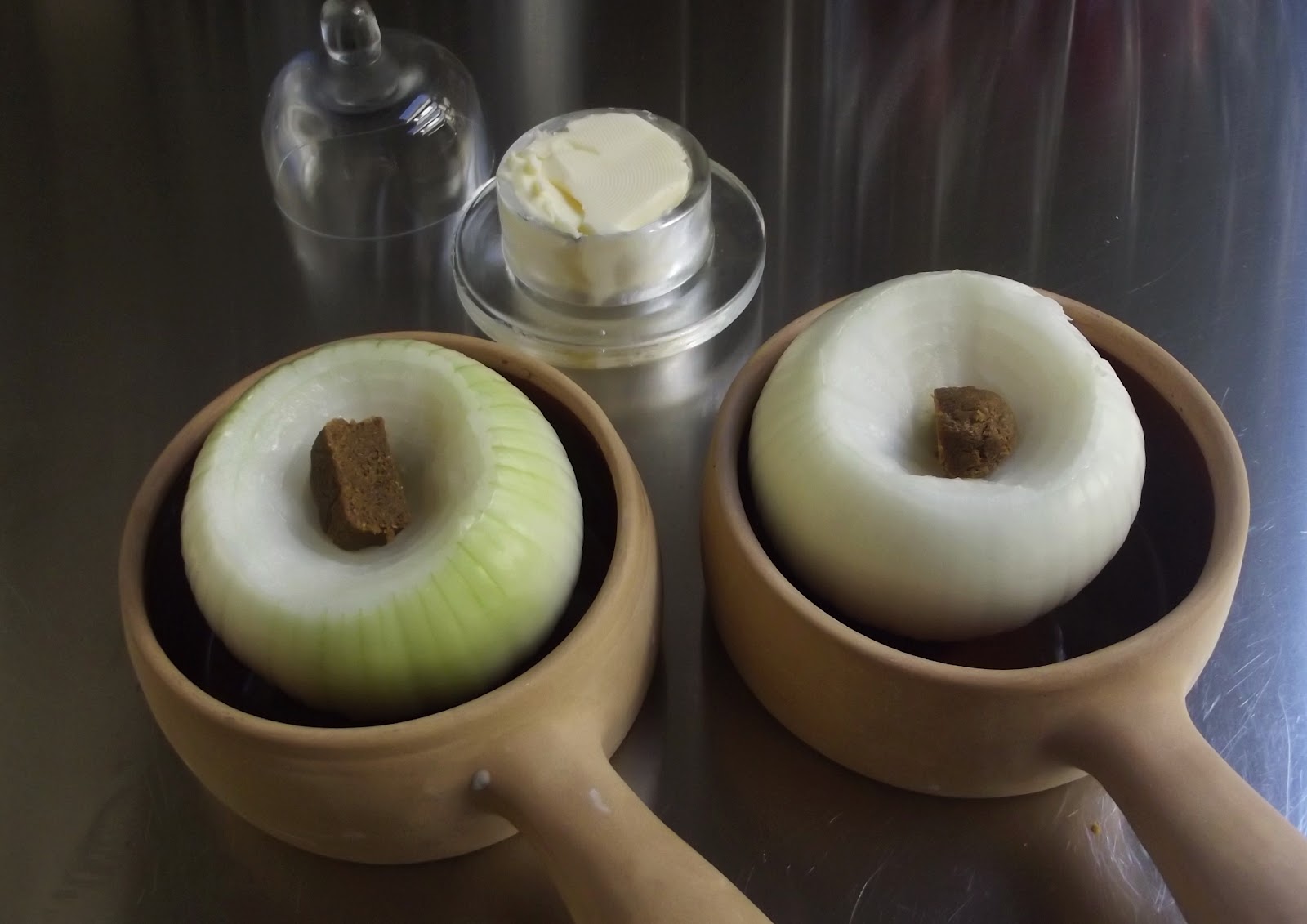
My grocery store had a big display of Vidalia onions, which have only been out now since late April. And I remembered one of my favorite dishes from early in my marriage, when I learned how fabulous Vidalia onions are.

My mother always loved onions – any kind. She’d have raw onion sandwiches for breakfast or lunch: just two pieces of bread with a little butter and a big slice of onion. Ack. I gag just thinking about it, because I’ve never liked raw onions. Spring onions, shallots, red onions, white onions, yellow onions. I pick them out of salads, and experiment on how little I can get away with adding to a recipe that calls for them. So the idea of eating a whole onion – even a cooked one – was not a thing I ever contemplated.

But I always did like onion soup. Loved it, in fact. So when I heard about this way of cooking Vidalias – in which the flavors are very similar – I figured I’d try it. It works especially well with Vidalias because of their natural sweetness.

Vidalia onions are larger and sweeter than standard yellow or white onions. They’re native to an area in Georgia where the soil is very low in sulfur, so they don’t impart that pungent taste to the back of my mouth that I associate with white or yellow onions. The season for them used to be very short, but with better storage techniques, they are now available all the way into December.

Now, when buying or cooking a Vidalia onion, I find that the best results stem from getting oneself in the mood from the start. You approach the onion bin at the grocery store, and put one or both hands on your hips, and you lean forward just a touch, and say, “Why, ah thank ah should cook some Vah-DAY-ya onions tonight.” Works for me.


Big Baked Vidalias

For each serving:
1 medium Vidalia onion
1 small beef bouillon cube (the size needed to make 1 cup of liquid)
1 Tablespoon butter, softened
1-2 Tablespoons grated Parmigiano-Reggiano, or Grana Padano, or Gruyère cheese

Preheat the oven to 400º.

Remove any dry outer layers of the onion. Trim the root end – not so much as to remove it, but to flatten it enough that the onion will stand evenly on it. Cut enough of the top off the onion to leave about a 2-inch flat circle.


With a knife, hollow out a cone from the top of the onion, to a depth of one inch. Place the bouillon cube in the bottom of the cone, and fill the remainder of the cone with the butter.


To bake the onion, either wrap it entirely in foil and place it in a pan with a lip (in case of leaks), or place the onion in a small, individual oven-proof casserole dish and cover the top with foil. Bake one hour.


At the end of the hour, if you have wrapped the onion in foil, unfold the foil to expose the top of the onion; if you have used a small casserole dish, remove the foil. Sprinkle the cheese onto the top of the onion, and broil for two minutes or until the cheese begins to brown.

Note that the inside of the onion will be very hot, so let it sit for at least 5 minutes before serving

Friday, June 8, 2012

Almost Weekly Foodie Faves: A Friday Bloguette


What do you bring home from a trip? Snow globes? Christmas ornaments? Refrigerator magnets? I bring sand and olive oil.

Not together, mind you. The sand is from all those places that have beaches or lakes or rivers, and while it looks pretty in the jars in my kitchen, it’s not terribly useful. The olive oil, on the other hand, gives me an enduring pleasure as long as it lasts, and then it’s gone. Which makes olive oil from my travels a particularly happy collectible because there’s no long-term storage problem. I don’t have to keep dusting the jars or finding more shelf space, like I do with the sand.


Every good olive oil has a redolence of its own – lemony, earthy, grassy, ... the possibilities cover almost as much territory as wine. Always buy extra virgin, the first cold pressed. The extra virgin is less acidic and is considered the best tasting; cold pressing is a method of extracting the oil that doesn’t involve heating it, which removes flavor. And while you don’t have to spend a lot of money, the more time and trouble a grower takes in the processing, the more it will cost. So splurge a little. (I must warn you though, that “Splurge a little” has been a theme of mine in life.)

Cold-pressed oil has the most flavor, but it also spoils the fastest. To inhibit spoilage – and trust me, your nose will know when it’s rancid – you want to keep the oil in a cool, dark place, and not in clear glass. Try to use it within six months, but if it’s older than that and doesn’t smell off, it’ll still be fine. They say smell of rancid oil is a lot like that of cardboard boxes. I say it's just bad.

So here’s my current supply. The one on the left is Queen Creek Olive Oil, from a company we visited in Scottsdale in January. The middle one is from Olea Estates, a Greek company, that I bought in May at the farmers’ market in St. Louis. And the last is from the Franschhoek Olive Oil Company in the wine region of South Africa, which we visited in February. So when I drizzle some over some sliced Jersey tomatoes this summer, I can close my eyes and pretend I’m back in one of those places. Sort of like experiencing my travels all over again.

Monday, June 4, 2012

Summertime and the Grillin’ Is Easy


Grilling makes me happy, and not just because it’s a way to get my husband to do the cooking, though that certainly helps. Back when we were first married, for reasons I’ve yet to figure out, we divided household chores into “Woman’s Work” and “Man’s Work.” The rule seemed to be “If it’s inside the house, it’s Woman’s Work; if it’s outside, it’s Man’s.” (And if this sounds sexist to you, ...well, you have to find some way of divvying up the chores.) So trash cans inside the house were my problem; trash cans outside were his. Cooking inside the house was my job; cooking outside became his. And over the years, he’s developed into quite an accomplished grillmaster, even though he professes each time to have forgotten how long, how much heat, whether to baste, etc. I think he just wants to be able to share the blame if something goes wrong. I tell him that if it goes up in smoke, we’ll order pizza.

But my fondness for grilling goes beyond the work-avoidance factor. The wonderful smell of meat roasting over an open fire, the crispiness of the outside of the meat that you really can’t achieve in an oven, and all the wonderful marinades that work with grilled meats.

As we cruise into summer, I offer you one of my all-time favorite marinades for pork tenderloin. (You can even use it with oven-roasting, but don’t tell my husband.)


While we’re on the subject of summer, I want to call to your attention a wonderful summer read by my friend Leslie Davis Guccione, called The Chick Palace. It’s available only as an e-book, on either Kindle or Nook. And in either case, it’s only $2.99 – what a steal. Here’s the review I posted on amazon.com and barnesandnoble.com.

“Look, Muffy, a book for us.” Like the Preppy Handbook, The Chick Palace speaks to a generation – or two – of women who have reached a certain stage in life and could use some guidance. But what Guccione offers is not so much guidance as consolation that we all hit these seminal events in our own ways, and the awareness that mostly what we need is the warmth of a solid female friendship as we rethink and reassess our lives. Ever since we discovered that we were all getting underpaid, that no one really wanted to change diapers, and that it was ok to have sex for fun, our collective knowledge has brought us back to center every time. Ms. Guccione uses her delightful storytelling to reaffirm this aspect of feminine bonding.

And what a fun read! Ms. Guccione has such a smooth style and such an ear for dialogue that you will find yourself effortlessly floating along with the story. I laughed out loud at Lilly and her wickedly funny retorts to the man she has twice married and divorced; I teared up with Johanna as she sees herself suddenly as The One in Charge - the Mother Superior of her birth family - and wonders how she matches up with her own mother. And the appearance of Dean Delaney, the boy who broke Johanna's heart in the summer before college, adds a twist that makes you just want to keep on reading.

So download a copy of The Chick Palace, grill up some of this scrumptious pork tenderloin, and celebrate the arrival of summer.

Honey-Gingered Pork Tenderloins, adapted from Gourmet magazine, August 1998
Yield: Serves 4

two ¾-pound pork tenderloins
¼ cup honey
¼ cup soy sauce
¼ cup oyster sauce
2 tablespoons packed brown sugar
1 tablespoon plus 1 teaspoon fresh ginger, minced
1 tablespoon garlic, minced
1 tablespoon ketchup
1 teaspoon sesame oil
¼ teaspoon onion powder
¼ teaspoon cayenne
¼ teaspoon cinnamon

Garnish: fresh flat-leafed parsley sprigs

Pat pork dry and arrange in a shallow dish or heavy-duty sealable plastic bag.

In a bowl, whisk together all remaining ingredients and pour marinade over pork. Turn pork to coat well. Chill pork, covered, turning it once or twice, at least 8 hours and up to 1 day.

Remove the pork from the marinade, reserving the marinade, and arrange tenderloins on a lightly oiled rack set 5-6 inches over medium-high heat. Grill pork, basting with reserved marinade and turning it every 3-4 minutes, for 10 minutes total. Remove marinade, continuing to cook pork, turning it every 3-4 minutes, about 10 minutes more. Let pork stand 5 minutes before slicing in ½-inch slices.

Once you no longer need the marinade for basting, pour it into a small saucepan, add 2-3 tablespoons of water, and bring it to a boil. Keep the marinade on a low boil for at least 5 minutes, or long enough for it to thicken slightly.

Serve pork garnished with parsley sprigs, and with a small pitcher of the thickened marinade on the side.

Kitchen Goddess notes: 1. If you have guests who are allergic to shellfish, you can substitute Asian fish sauce for the oyster sauce. 2. If you have no grill or a monsoon has just struck your neighborhood, you can roast the meat at 400º for 25 minutes, basting and turning it occasionally. 

Friday, June 1, 2012

Almost Weekly Foodie Faves: A Friday Bloguette

Today’s bloguette is about a completely wonderful serving option for appetizers and many kinds of desserts. They’re 2½-ounce parfait glasses, from Libbey. I ordered mine from the Libbey website, but you can also get them from J.C. Penney; and I’ve just discovered a similar set of eight 3-oz glasses from Crate & Barrel.


P.F. Chang's are a bit larger than mine.
I started looking for something like these little glasses after a trip to P.F. Chang. As always, you can find anything on the web.

So how do I use them? Let me count the ways...

1. Mostly, I use them for desserts of all kinds. Any sort of mousse or chiffon is great in them. Say you want to make a lemon chiffon pie. Try instead making the crumb crust: bake it, then crumble a bit in the bottom of each of little glass. Now make the filling and spoon it on top. Add a small dollop of whipped cream, and you can serve one pie to a dozen people. I used to do this sort of thing with balloon wine glasses, but have discovered that most people – at least the women – are happier with a smaller dessert.


As they are, technically, small parfait glasses, the same technique works with layers of yogurt, granola, and fruit. Also ice cream and fruit, ice cream and jam, whipped cream and fruit that’s been marinated in liqueur,... and the list goes on.

2. I use them to serve cold soup as an hors d’oeuvre. I’ll set out a tray with several glasses already filled, then add a glass pitcher with extra soup, and a tray for the empties. Or I might serve a plate of 3-4 different “bites” as a first course, and include a small glass of a cold soup as one of the bites. Visually, it adds a nice touch to the landscape of the plate.

This is gazpacho with a hit of balsamic glaze.

3. I use them as individual flower vases for a dinner party, with, say, a single rose in each one at every place setting.

4. I haven’t done this, but could imagine using them to serve cordials after dinner. They only hold 2 ounces, remember?

Let me know if you come up with another good idea. Happy Friday!